Sandhill Crane Migration PhotoGraphy Workshop
Photograph Sandhill Cranes during their great migration from private blinds along the Platte River, guided by world-class photographers.
Experience One of Nature’s Greatest Wildlife Spectacles Up Close
March 18-21, 2027 or March 23-26, 2027 | Kearney, NE
Early Bird Tuition: $2,295 | Deposit: $500
Deposit due upon registration, full tuition due 120 days before the workshop. Workshops limited to 12 participants.
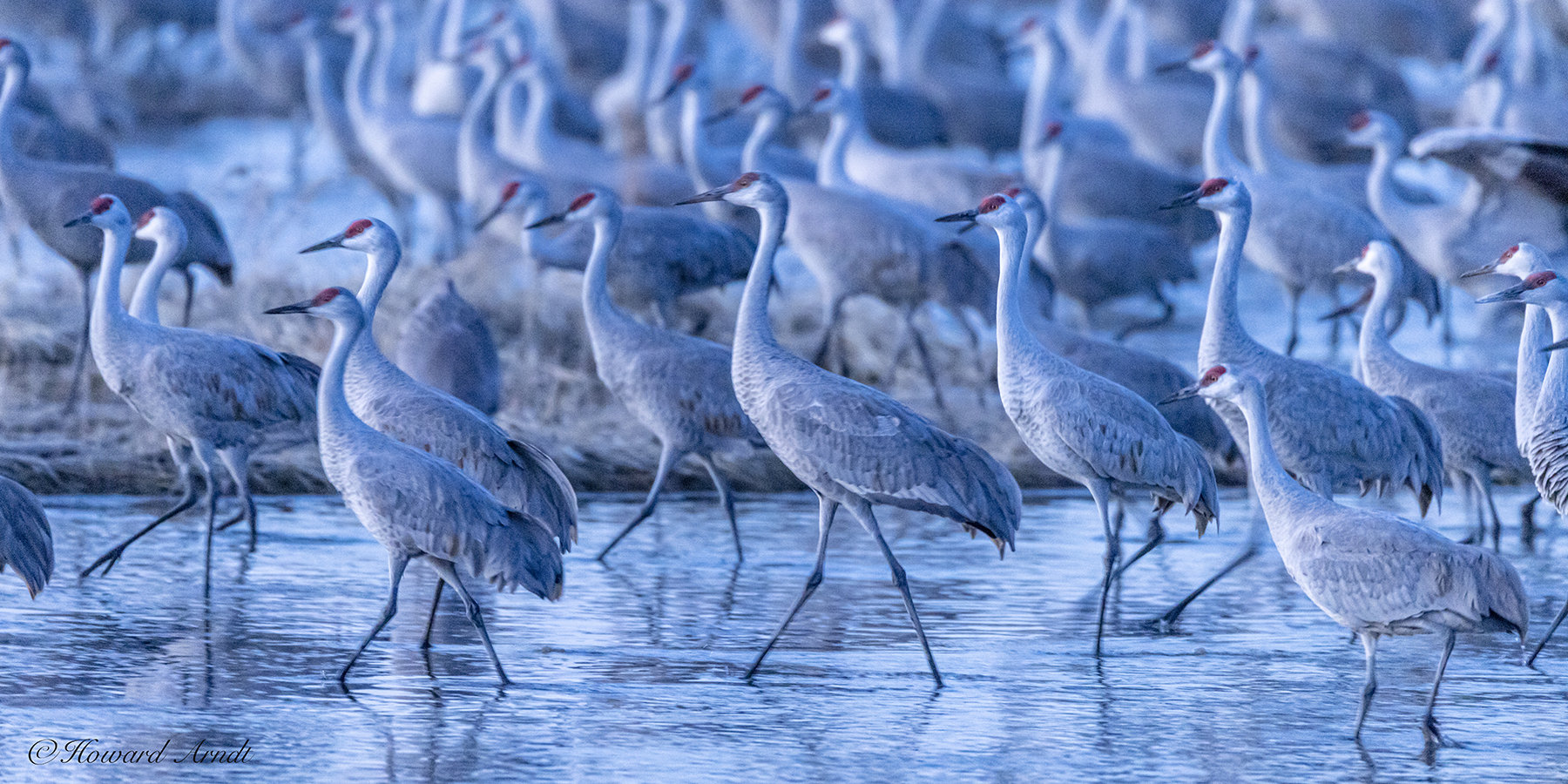
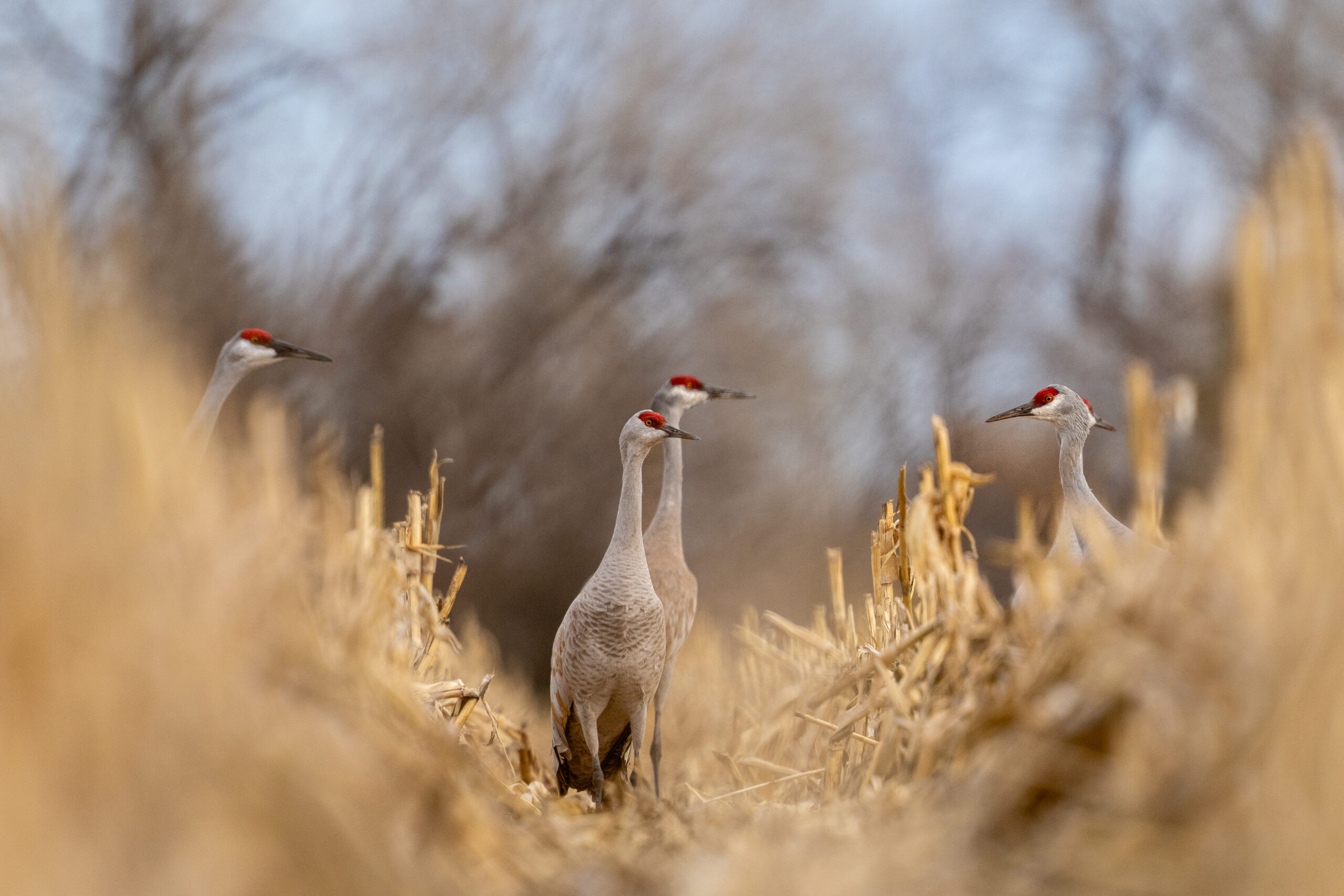
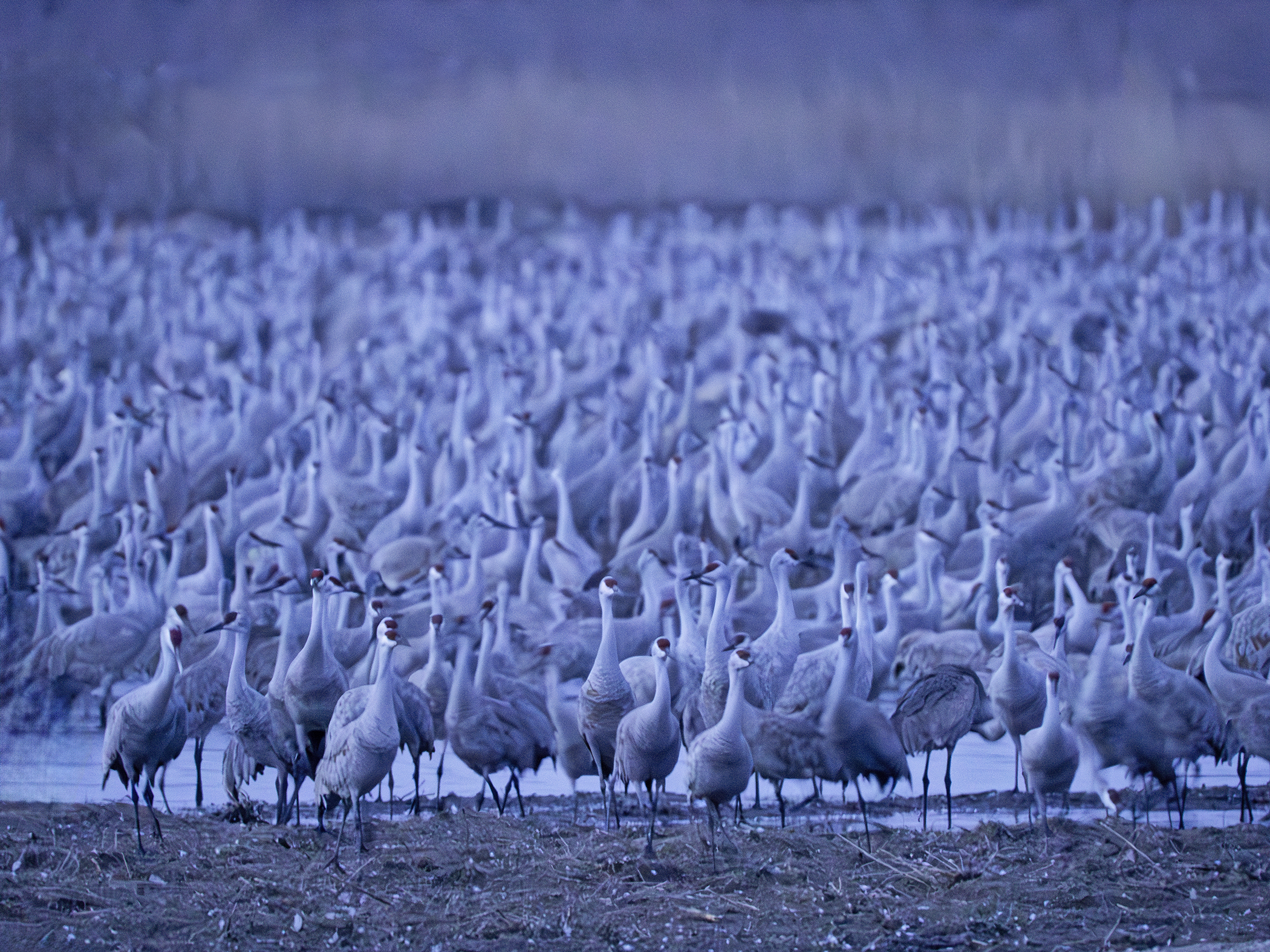
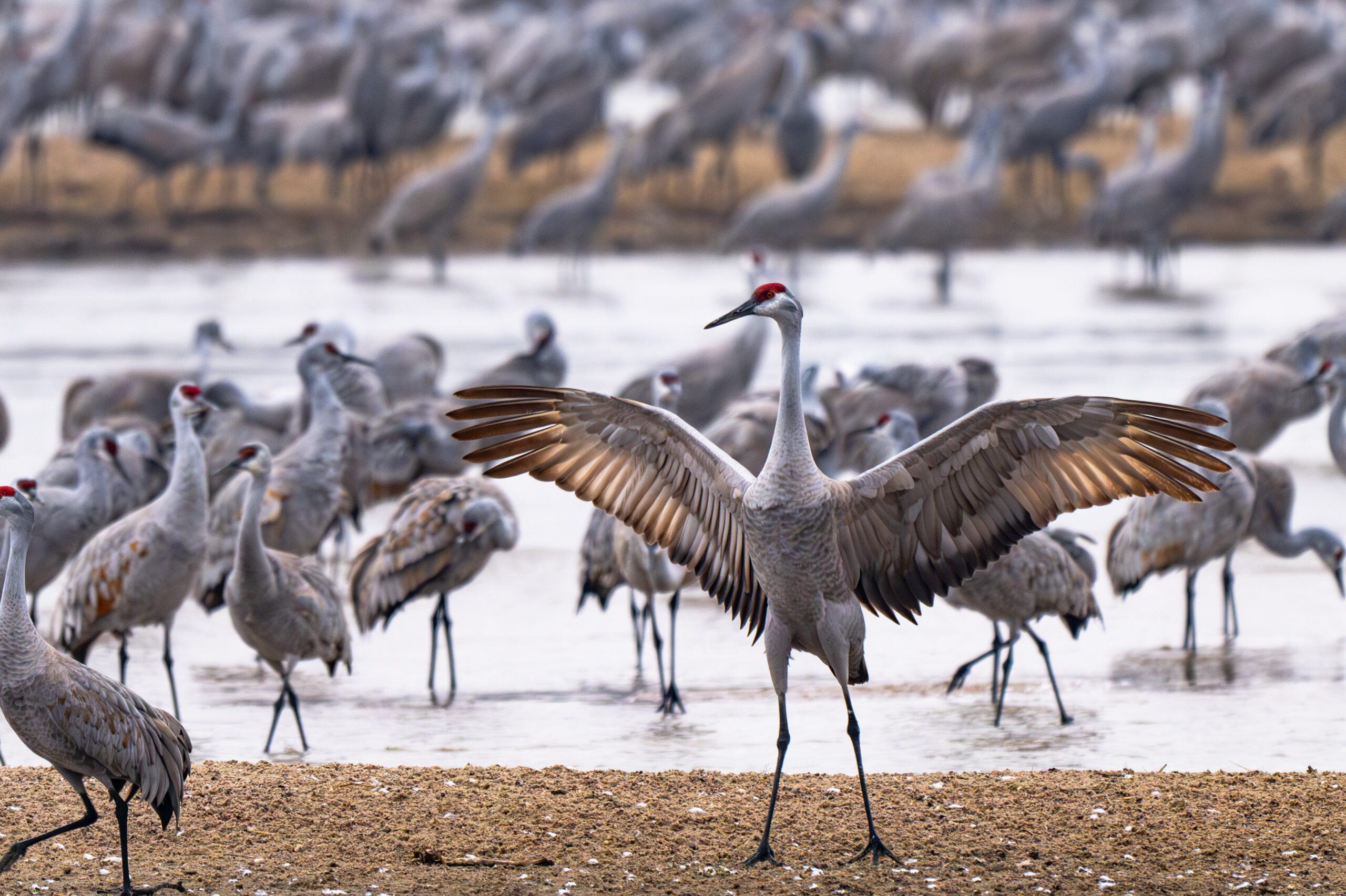
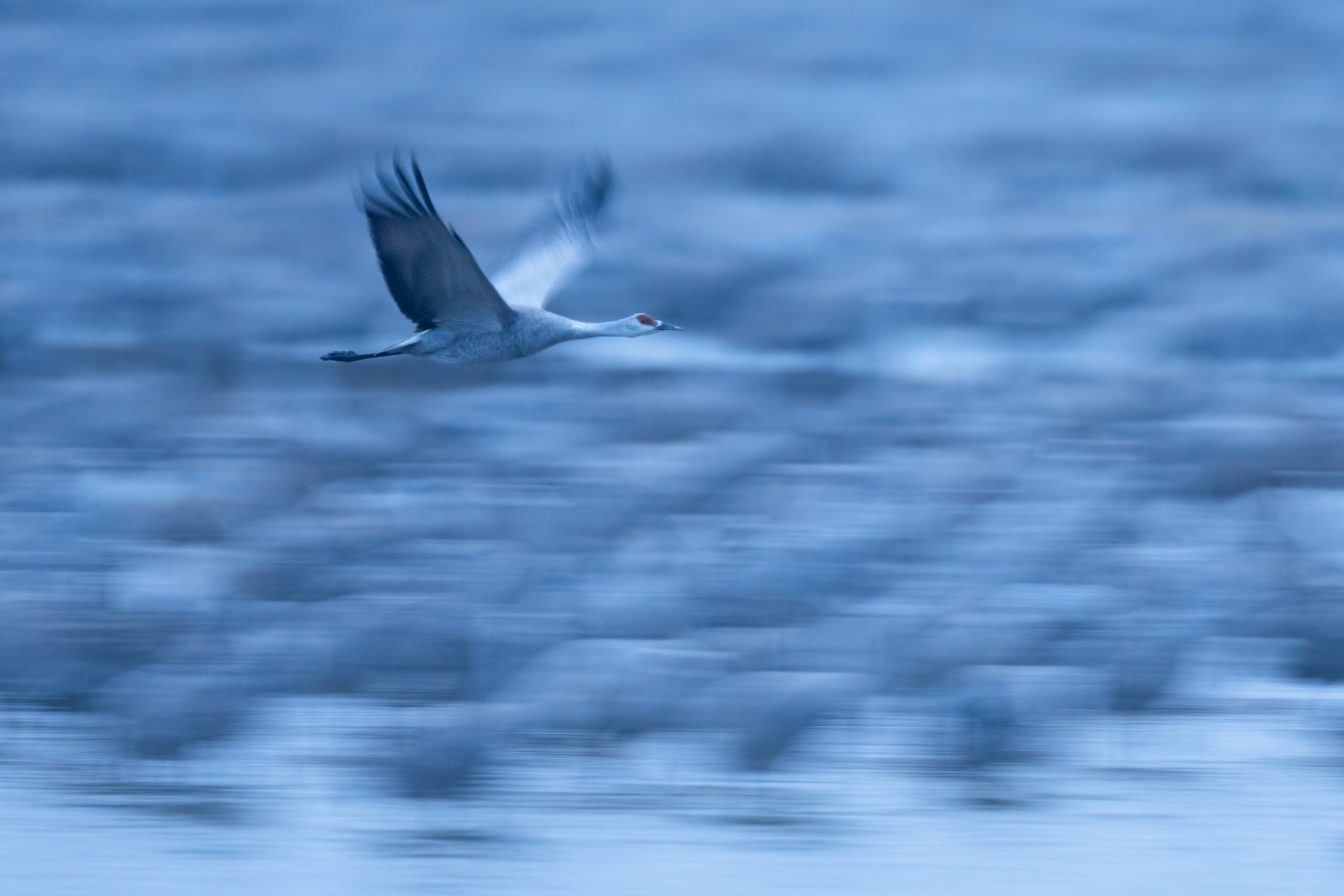
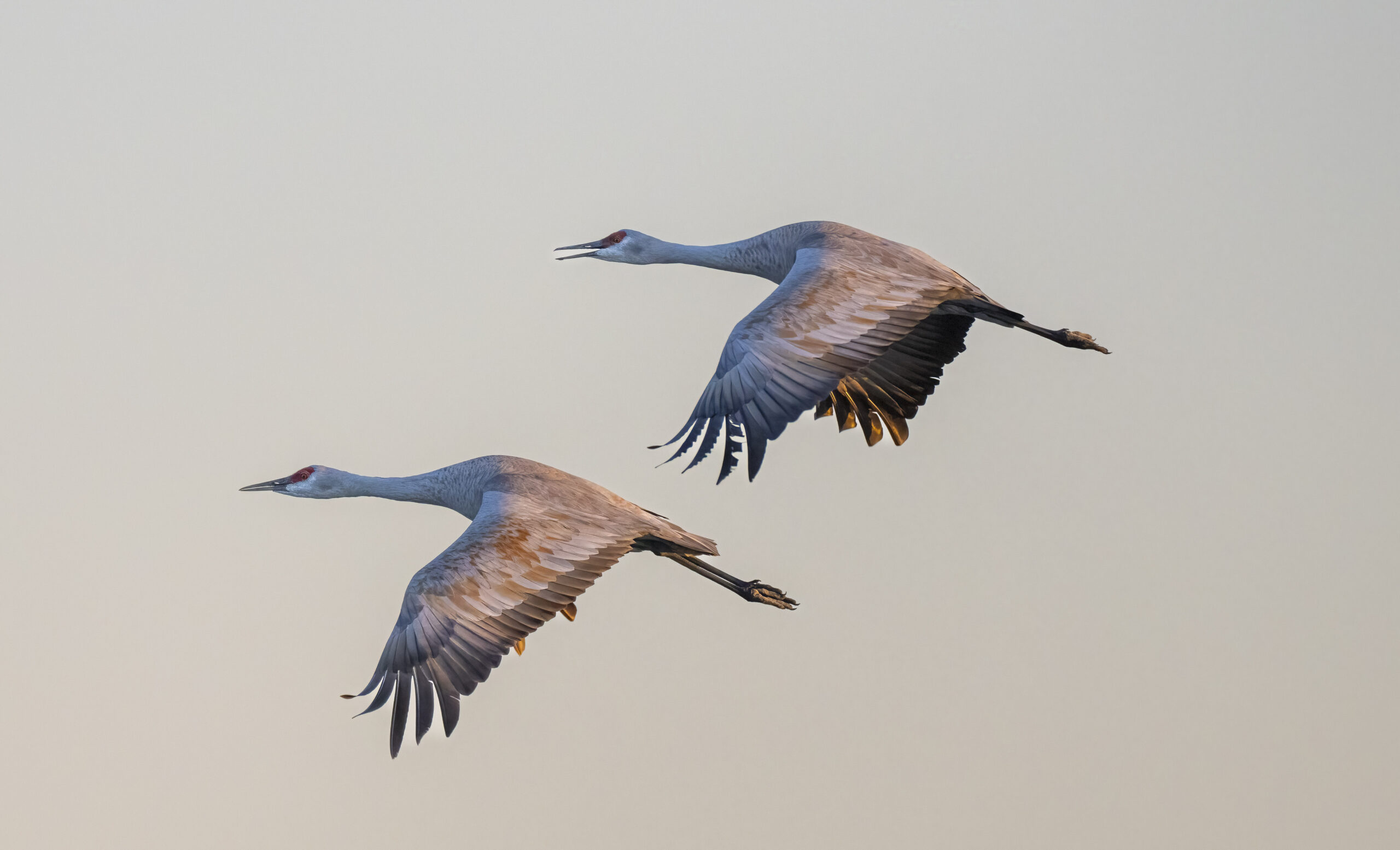
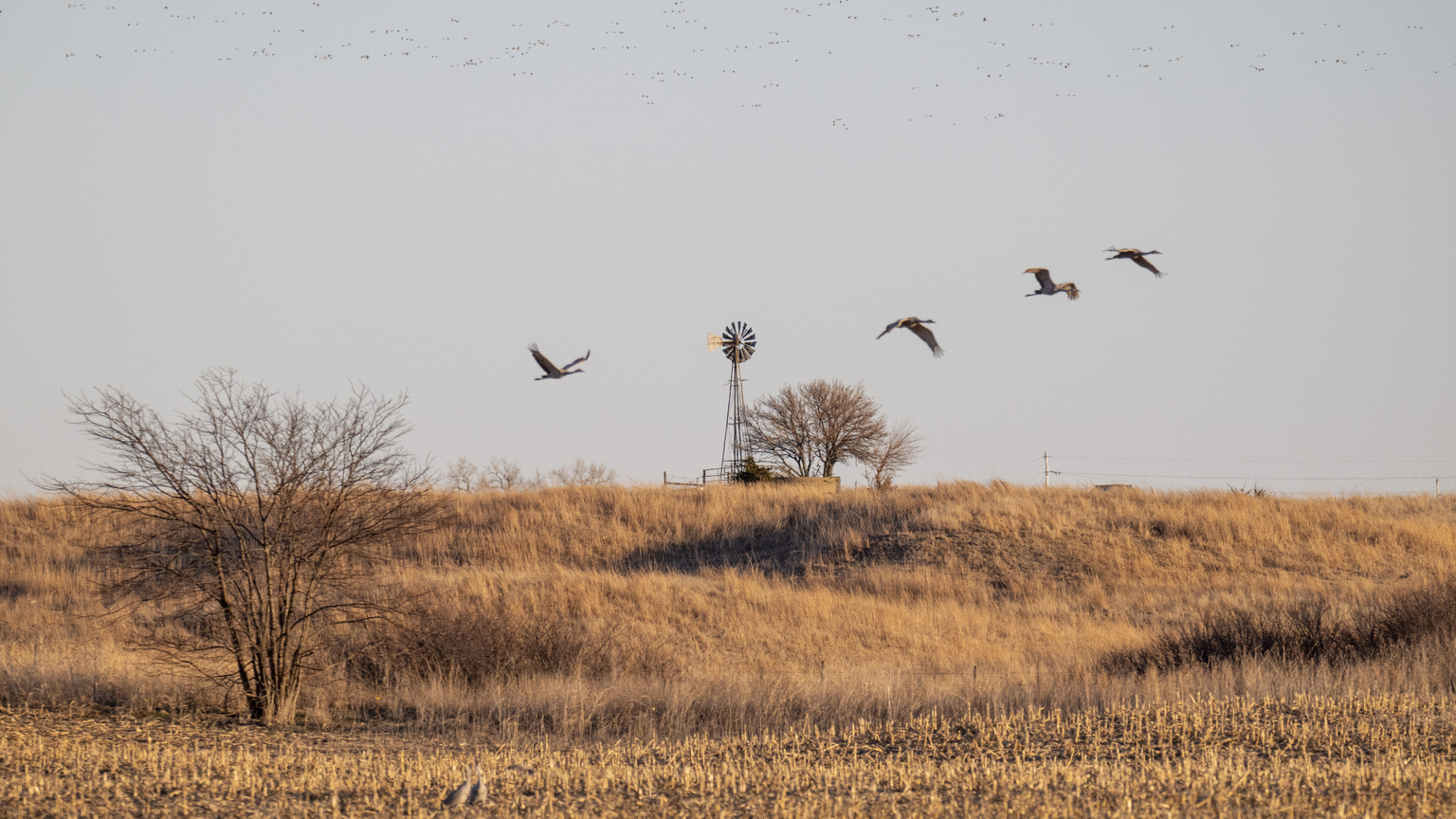
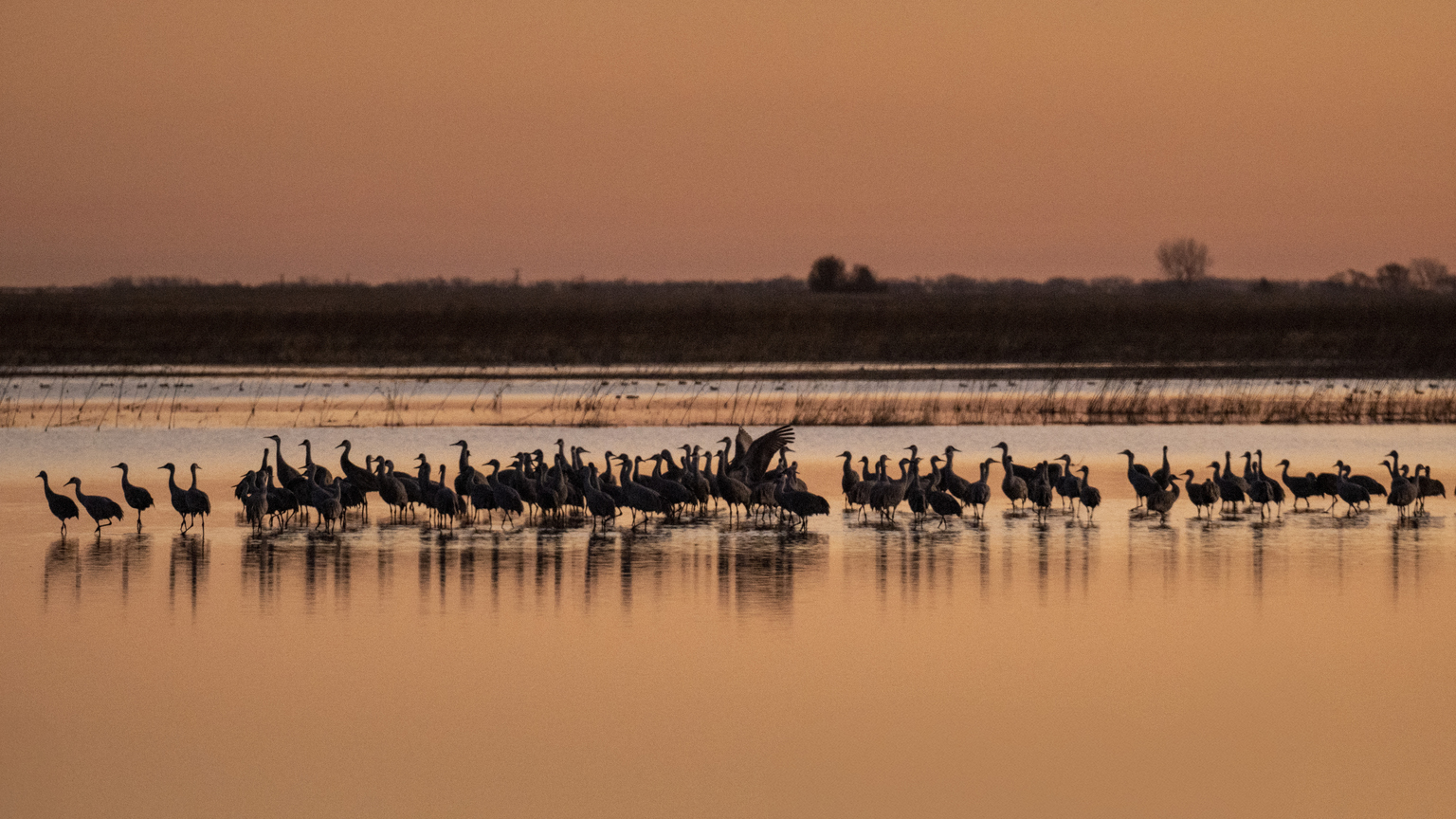
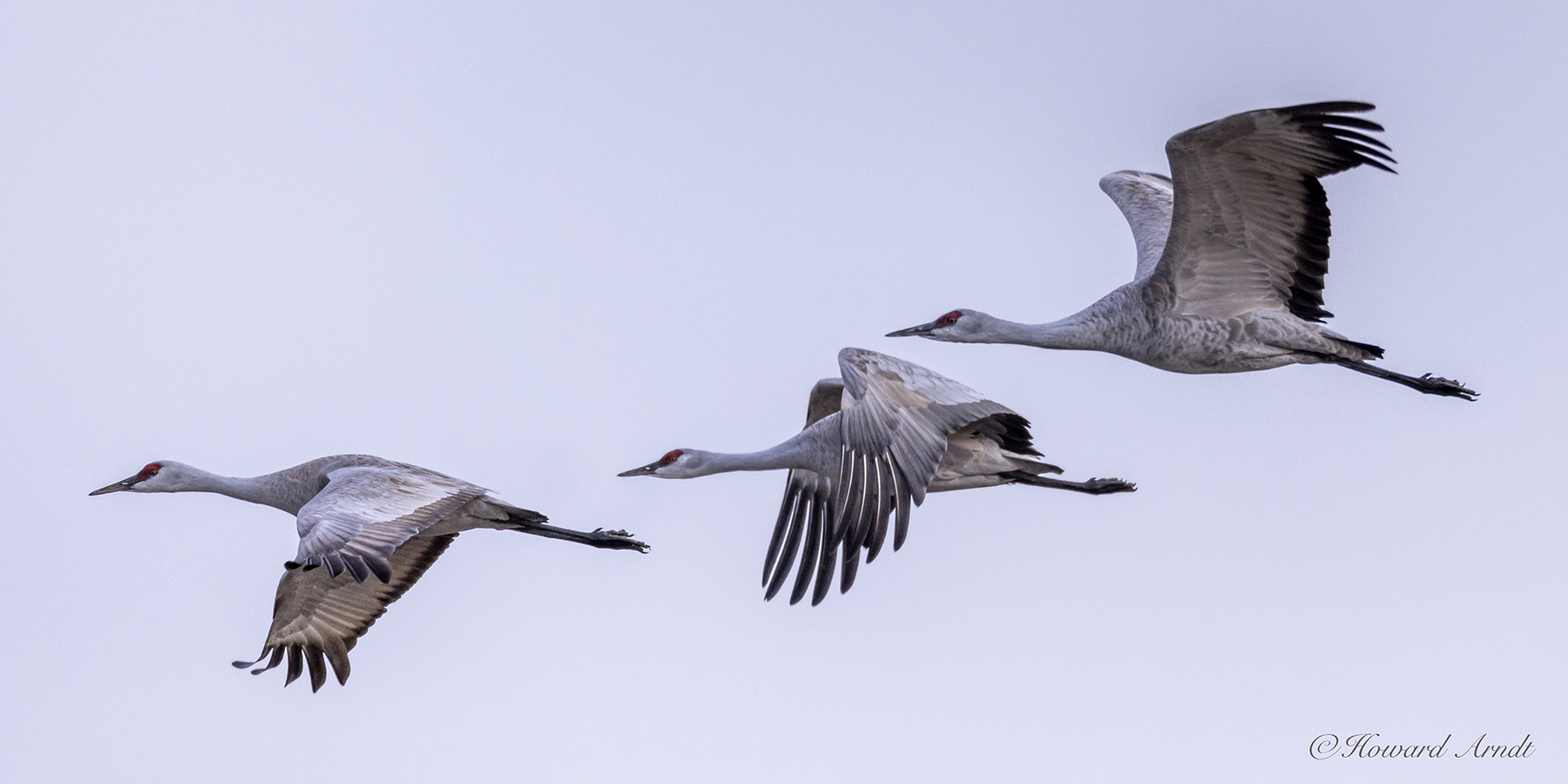
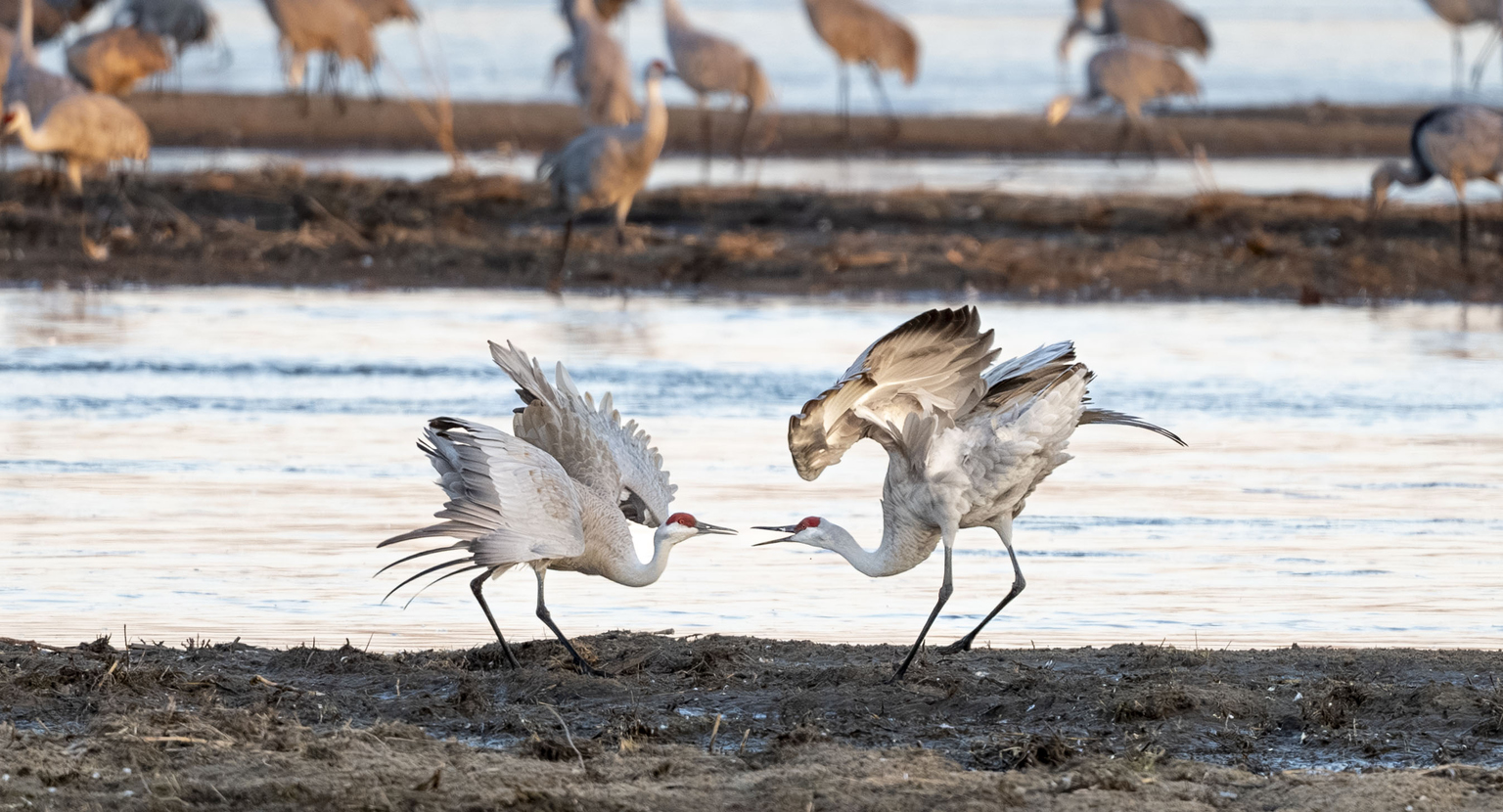
Each spring, the Sandhill Crane migration transforms Nebraska’s Platte River into one of the most extraordinary wildlife photography locations in the world. Nearly 80% of the world’s Sandhill Cranes pass through this narrow stretch of river, gathering in massive numbers as they rest and refuel on their journey north. It’s one of the most concentrated wildlife migrations on the planet, and an unforgettable experience for photographers.
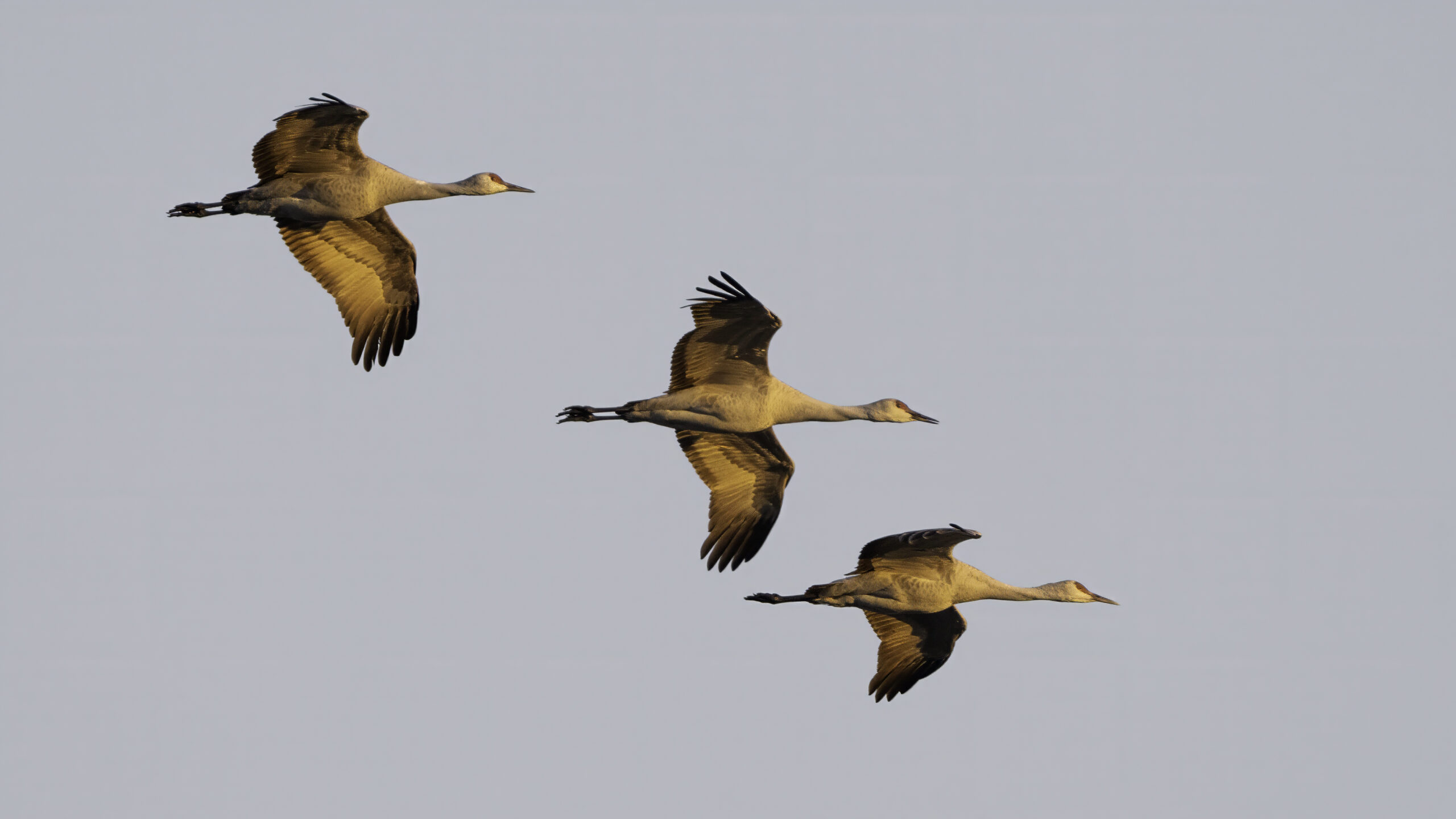
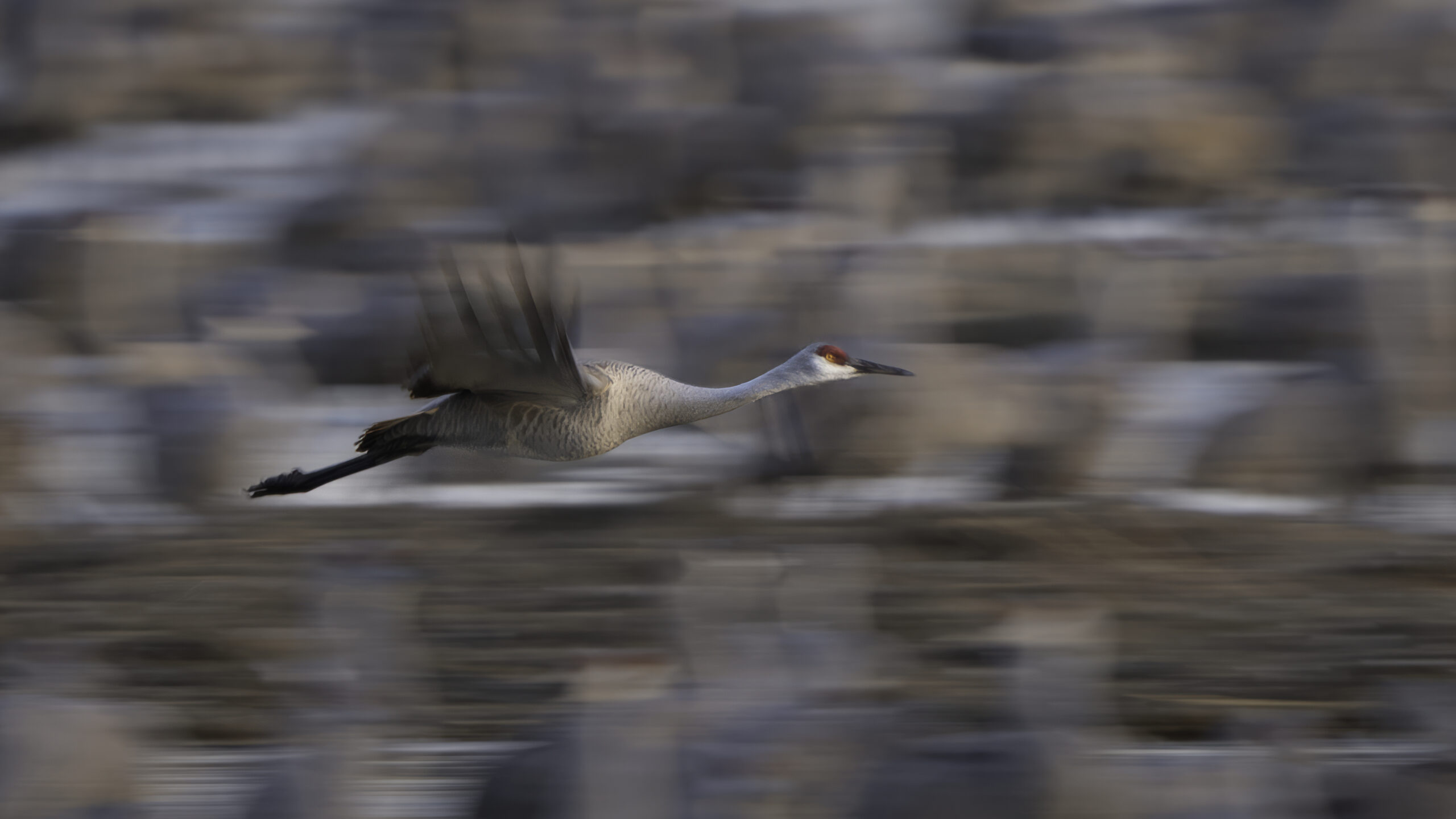
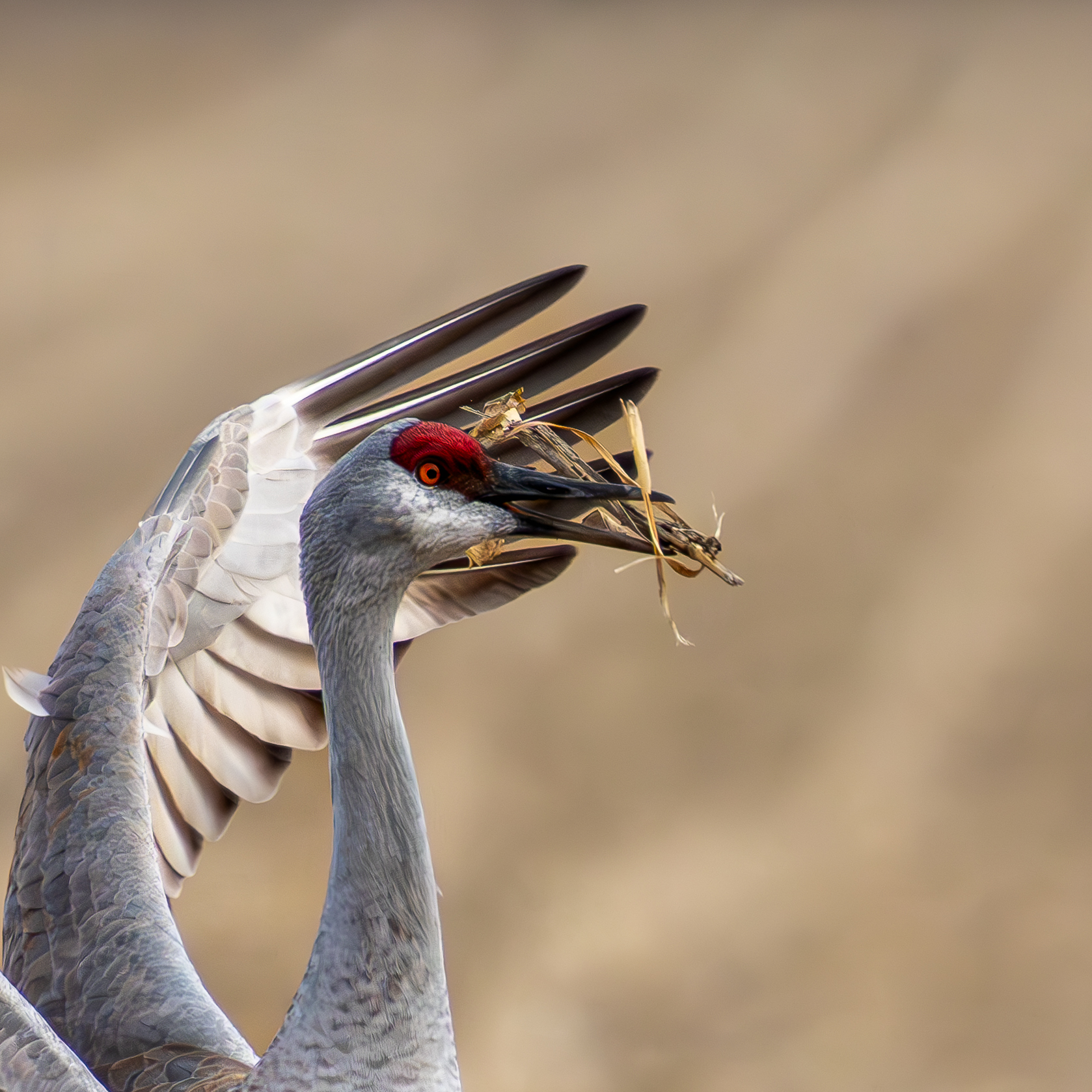
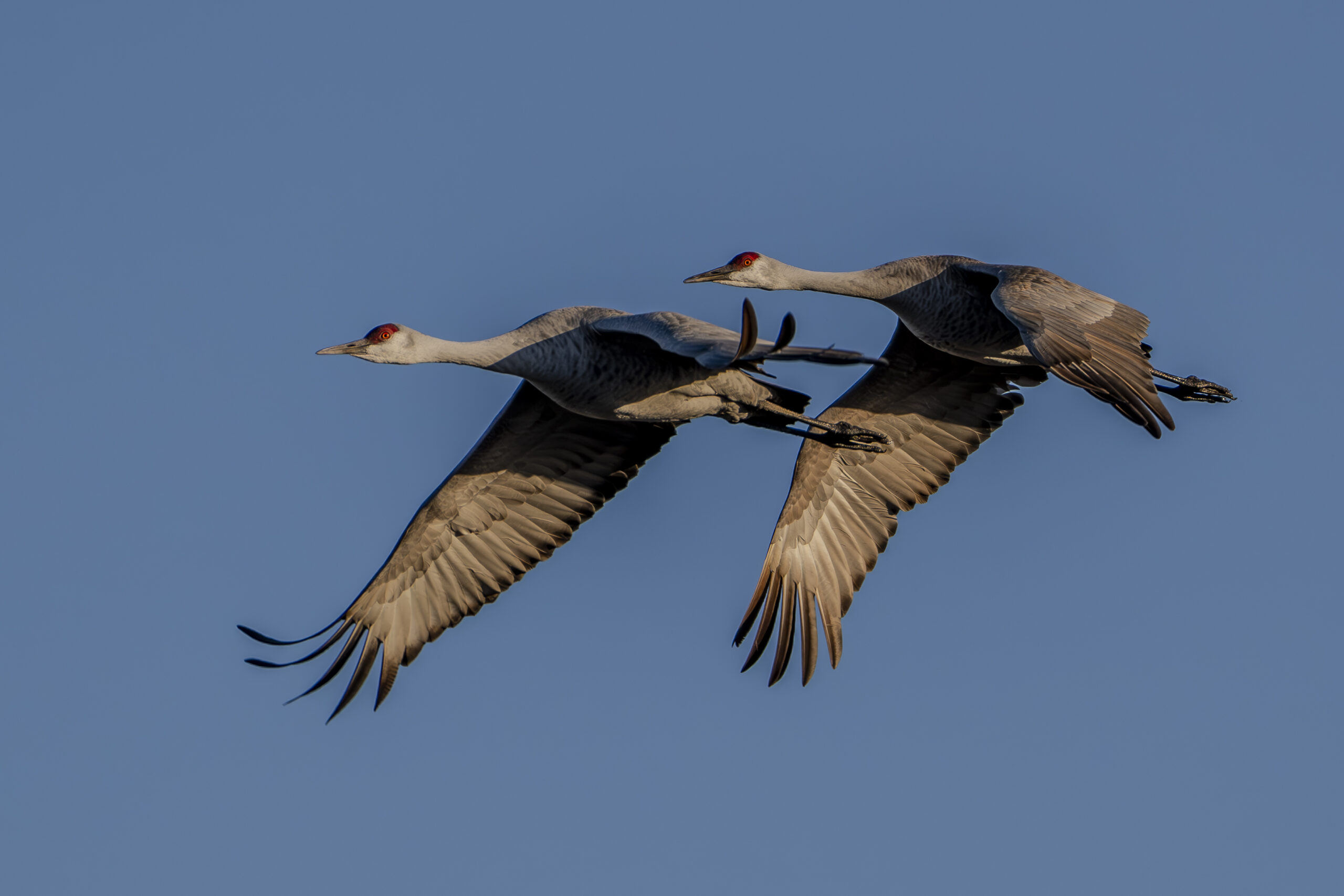
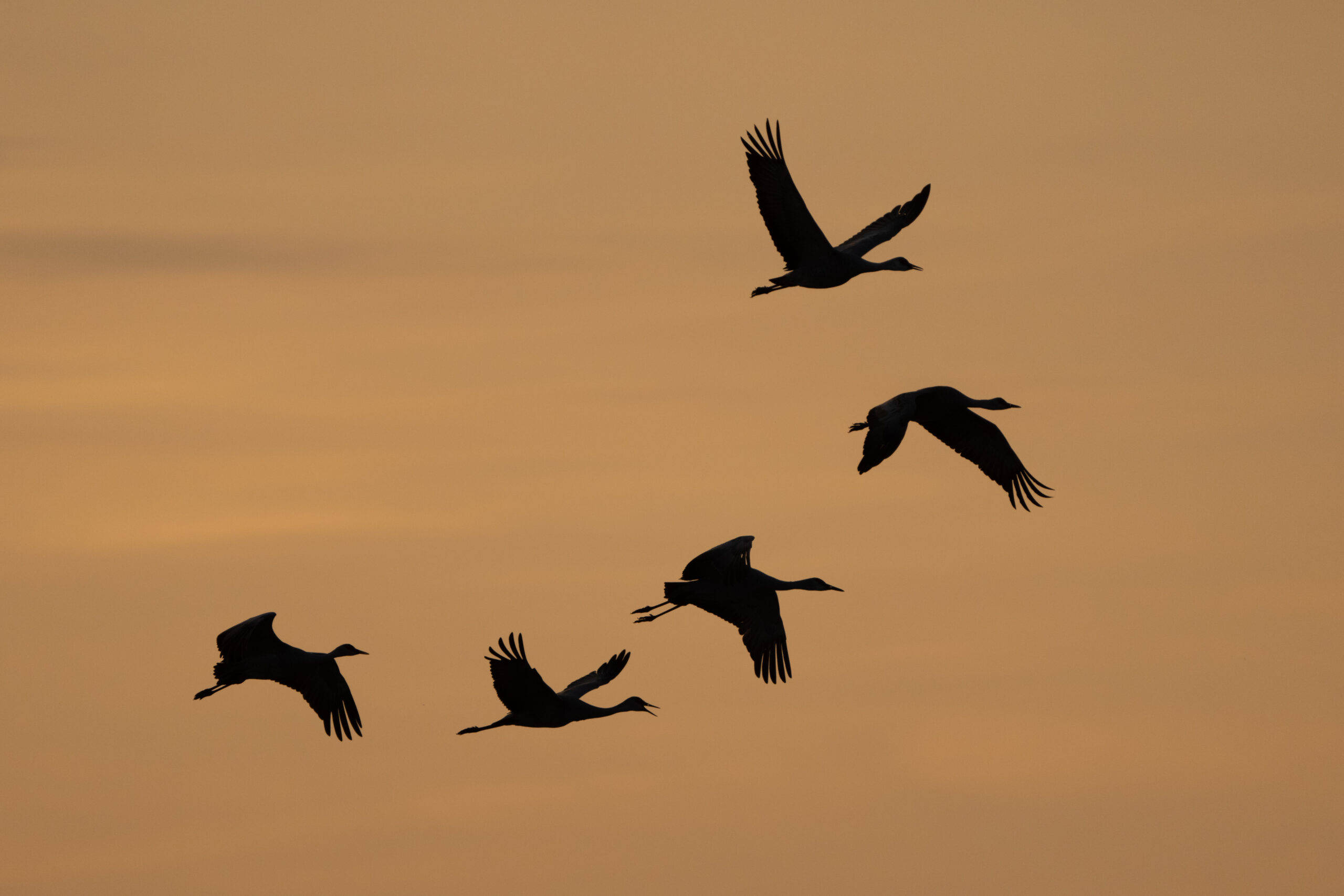
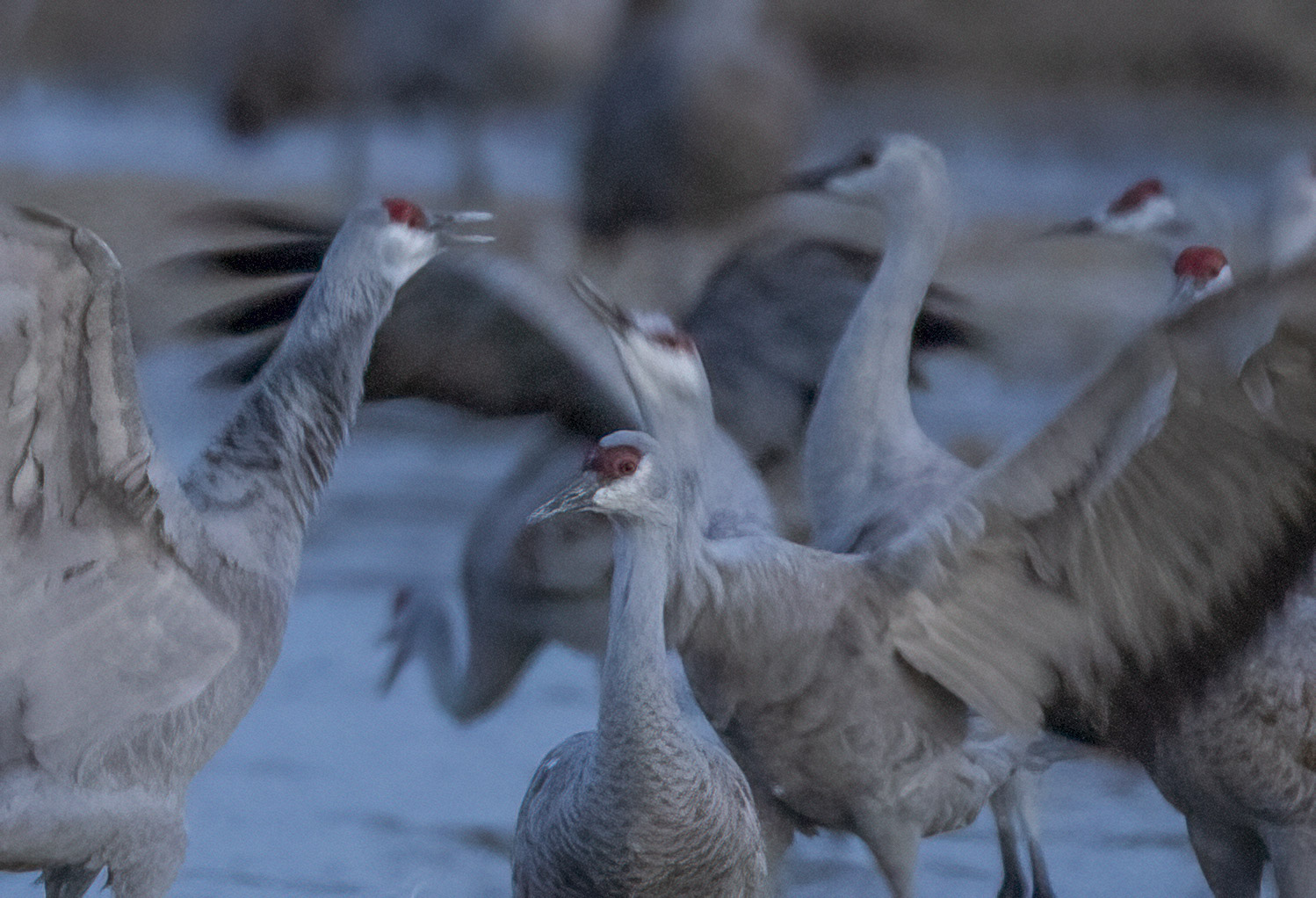
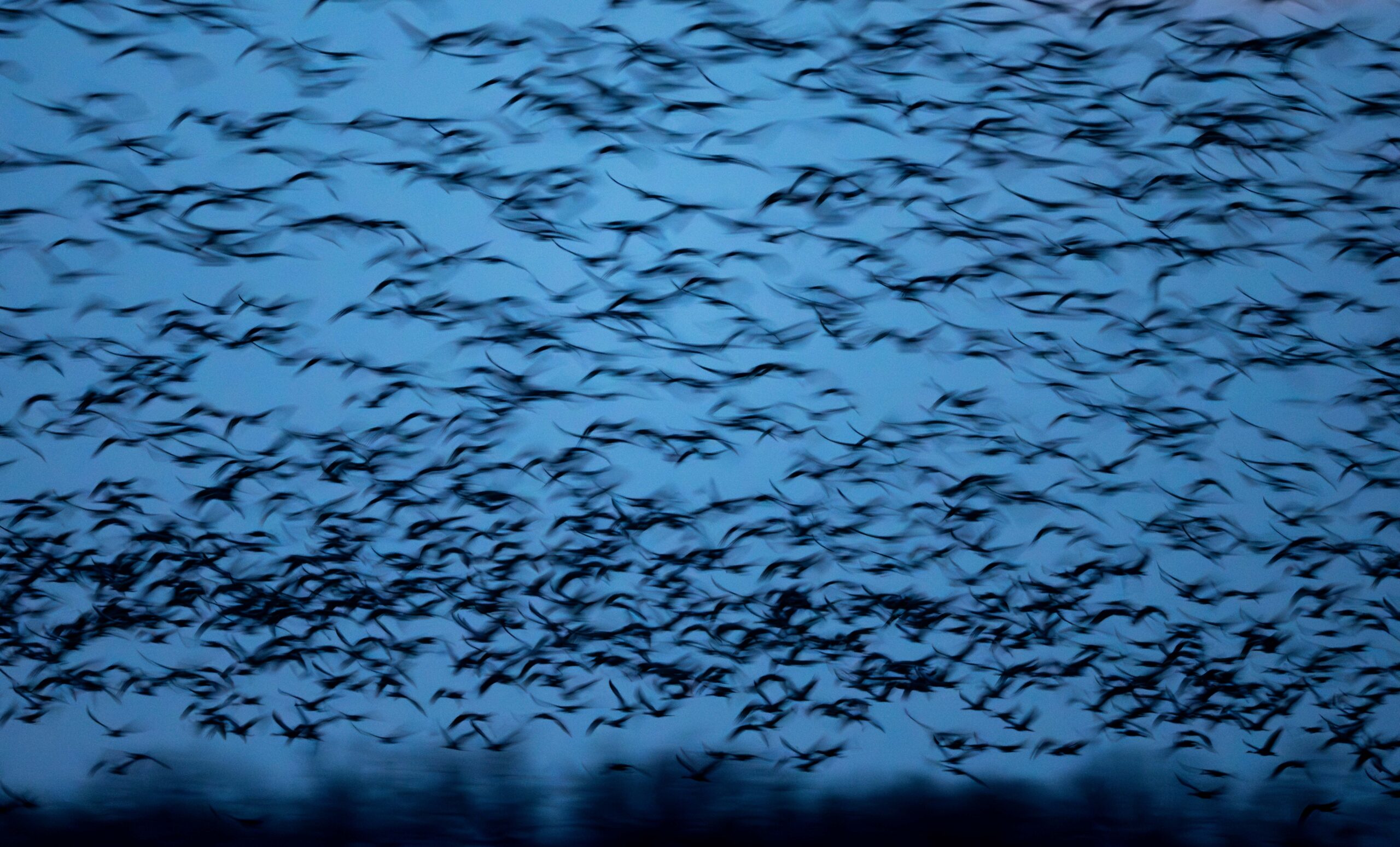
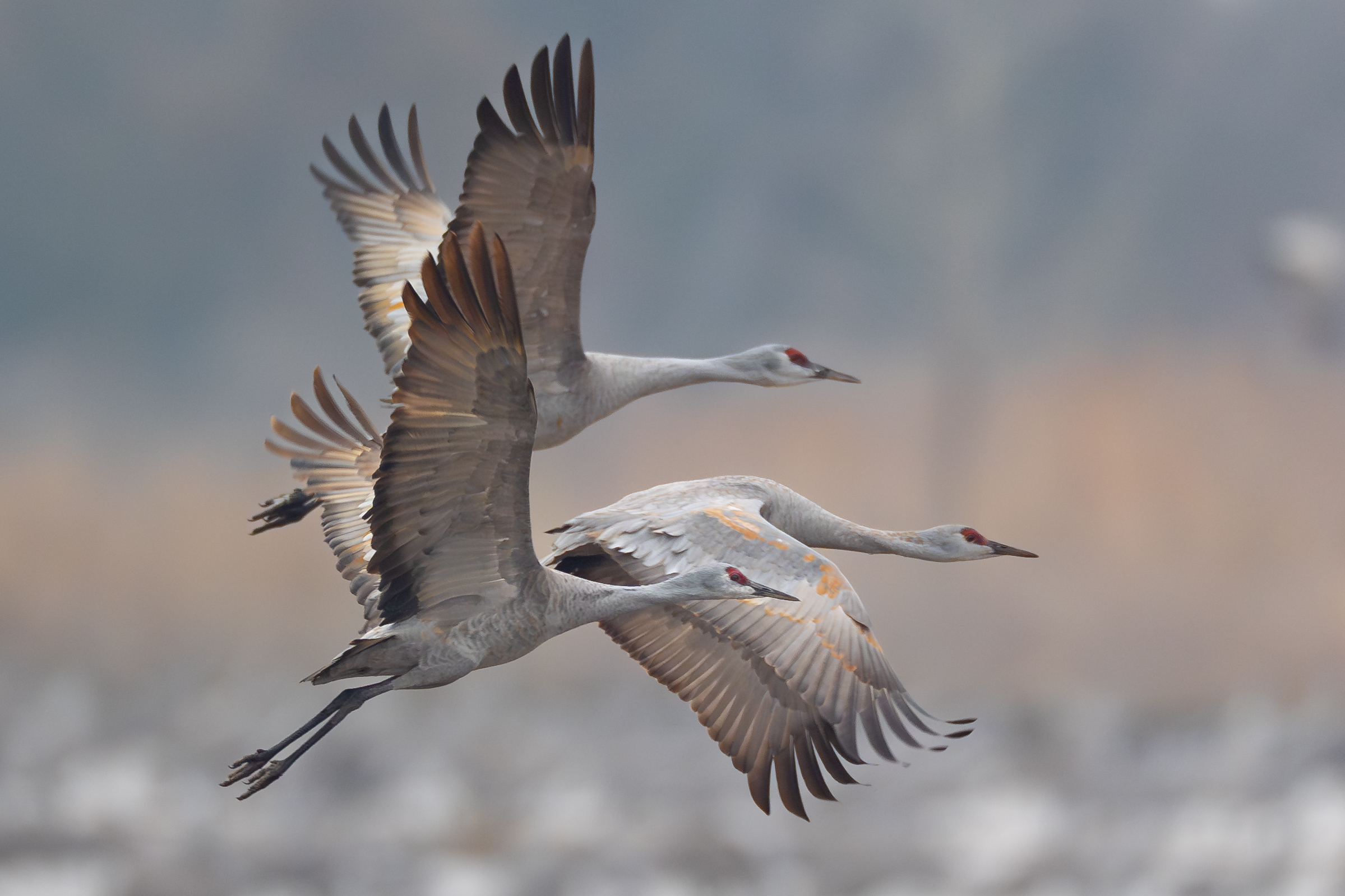
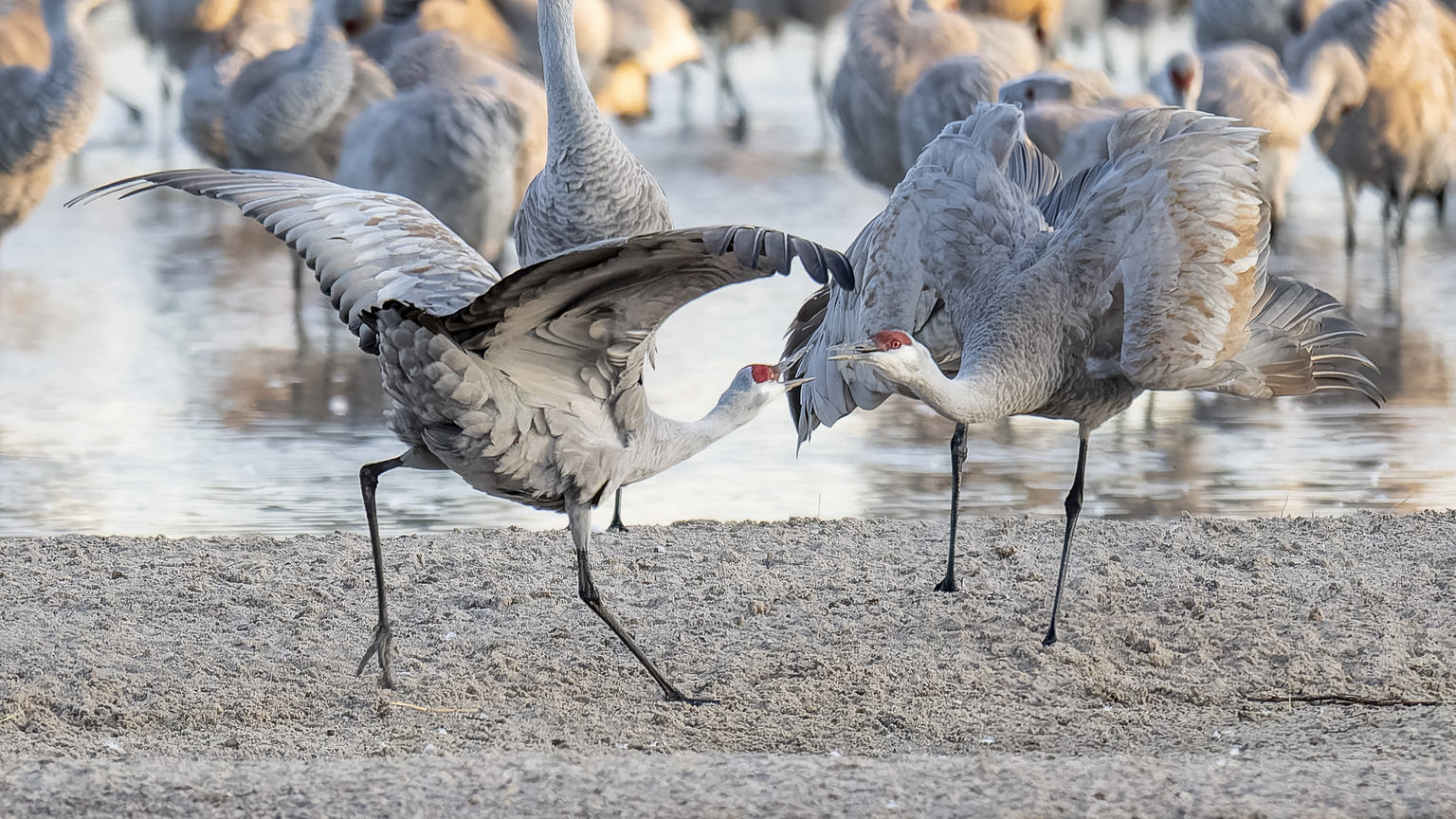
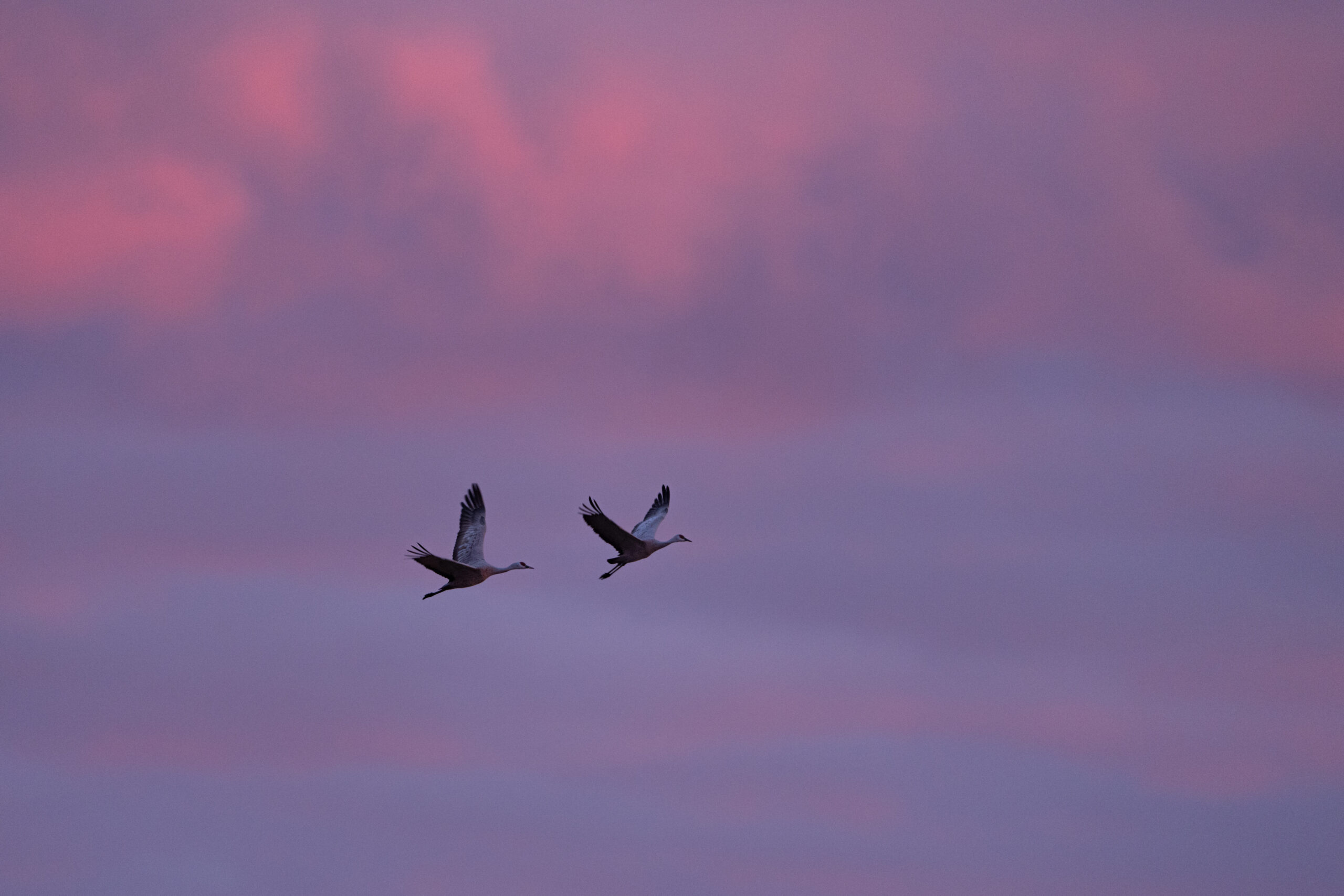
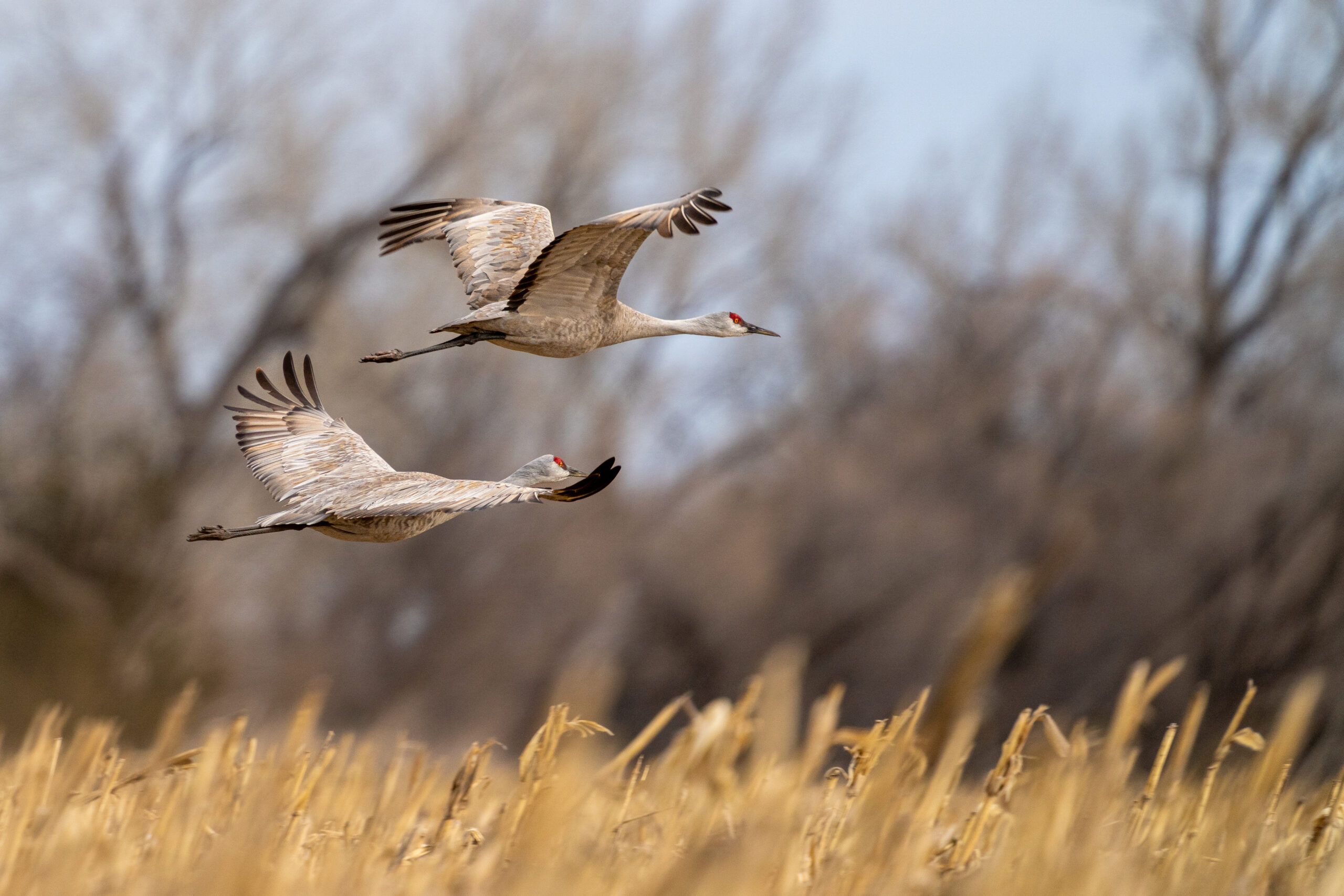
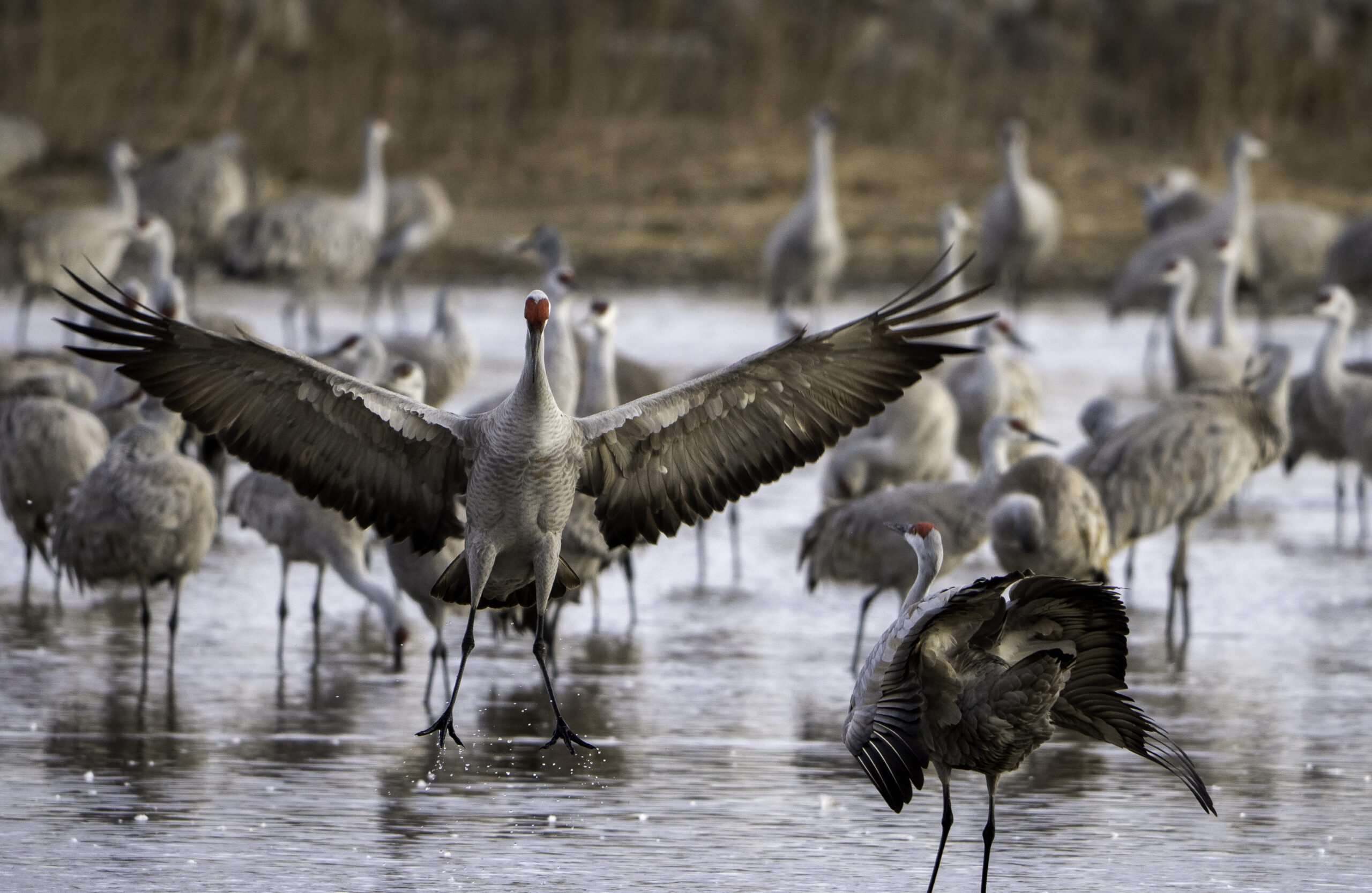
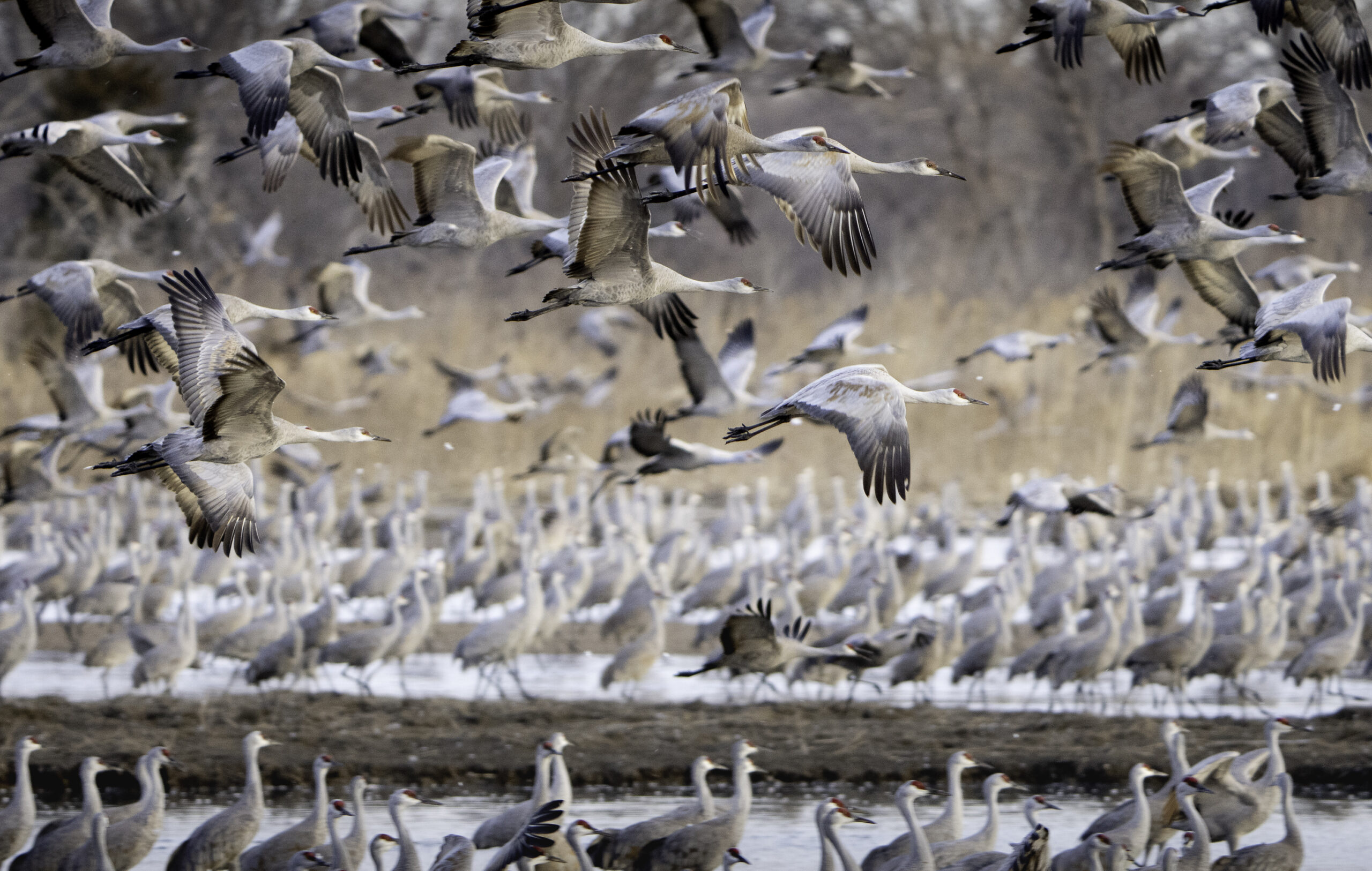
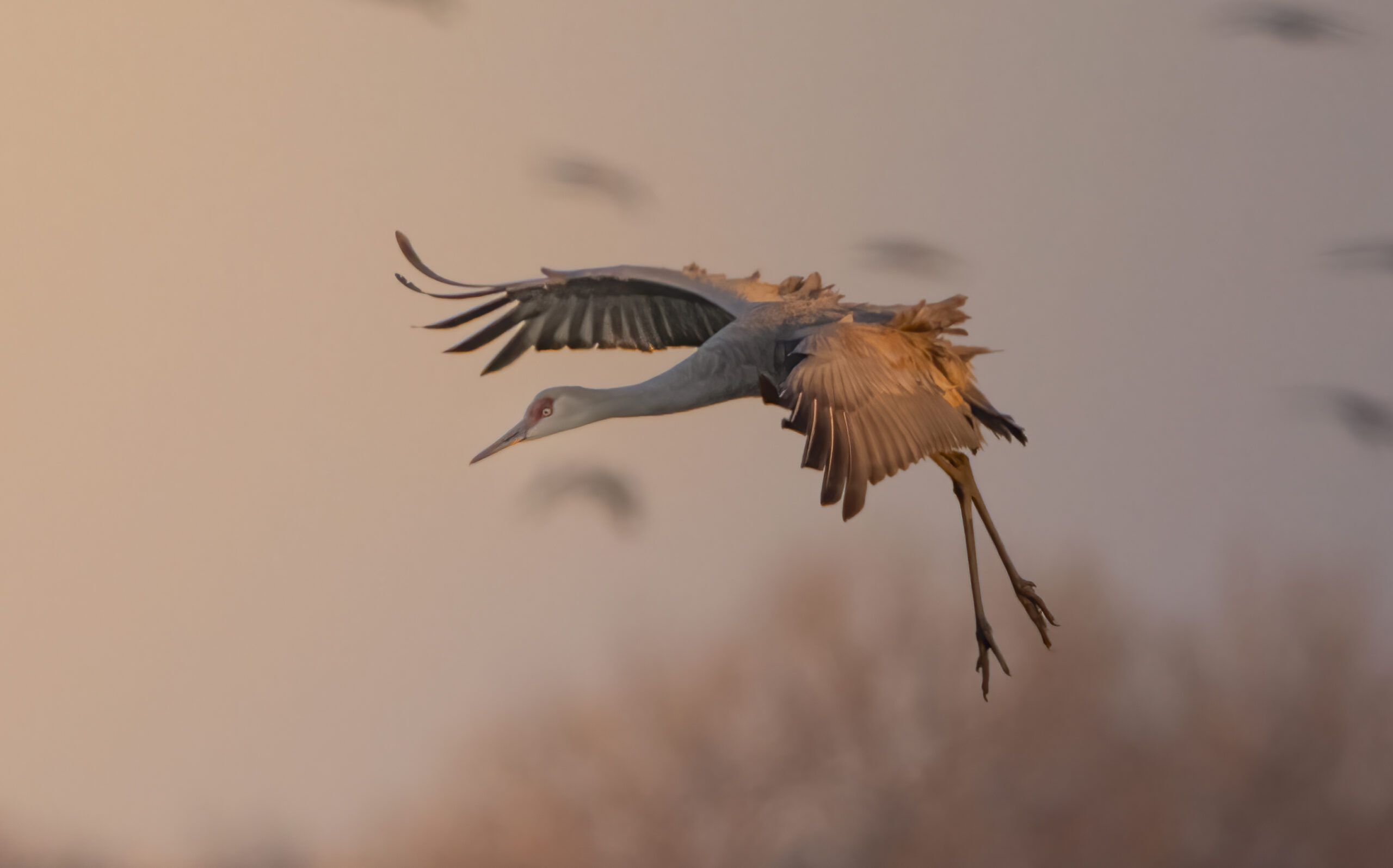
During this Sandhill Crane photography workshop in Nebraska, you’ll gain exclusive access to private photography blinds along the Platte River, placing you directly in the heart of the migration. From sunrise lift-offs to sunset roosts, you’ll photograph thousands of cranes moving through the sky, calling, dancing, and interacting in a constantly shifting landscape of light and motion.
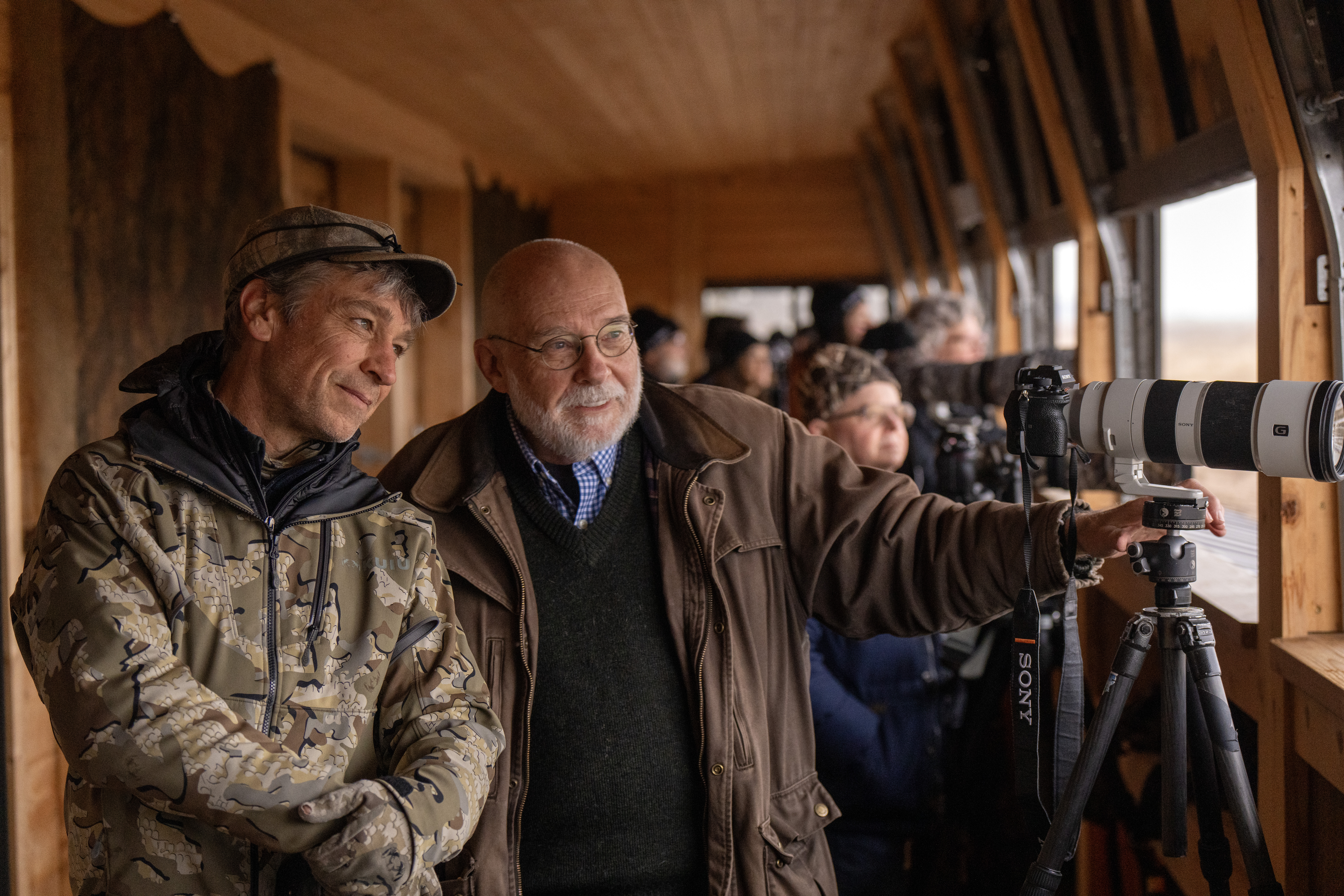
Guided by leading wildlife photographers and educators, including Michael Forsberg, Jim Richardson, Melissa Groo and Dave Showalter, you’ll learn how to anticipate behavior, work with changing conditions, and create compelling images that go beyond documentation and into storytelling.
This is more than a photography opportunity, it’s a front-row seat to one of nature’s great migrations.
Photographing from private blinds
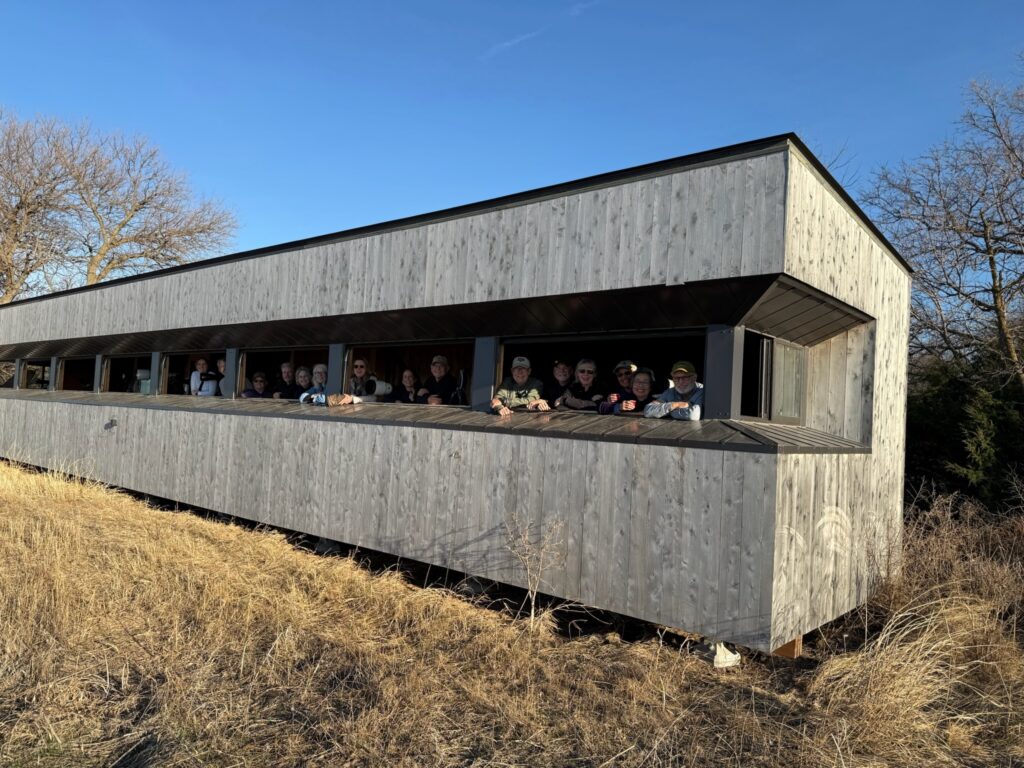
One of the most unique aspects of this workshop is the opportunity to photograph the Sandhill Crane migration from private blinds at Rowe Sanctuary along the river’s edge. These blinds place you at eye level with the cranes, offering an unobstructed, immersive perspective of their natural behavior without disturbing the birds.
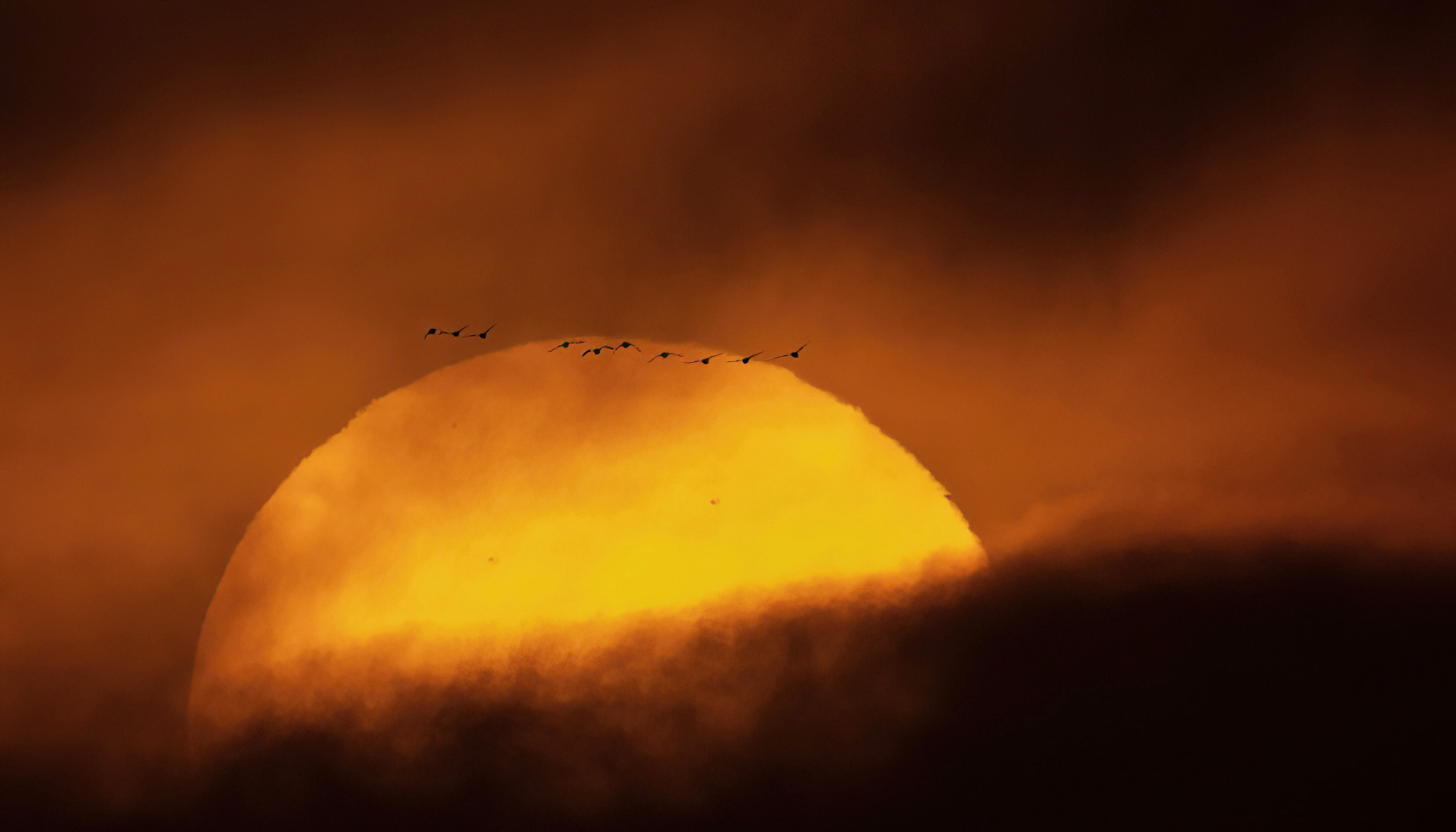
From inside the blinds, you’ll experience the full rhythm of the migration, from quiet anticipation in the early morning darkness to the explosive lift-off as thousands of cranes fill the sky, and the evening return as they settle back onto the river in fading light.
This controlled, low-impact environment allows you to focus entirely on observation and photography. With wall-to-wall viewing windows and carefully timed access, you’ll have the space and conditions needed to anticipate movement, work with changing light, and capture both wide environmental scenes and intimate behavioral moments.
Guided by expert photographers, you’ll learn how to read the flow of the flock, understand Sandhill Crane behavior, and make the most of every moment inside the blind, turning fleeting action into meaningful, intentional images.
At Summit Sandhill Cranes You Will
Photograph North America's Iconic Bird Migration
Experience the awe-inspiring Sandhill Crane migration, one of the most iconic wildlife spectacles in North America, and capture breathtaking images alongside expert instructors.
Learn from Leading Conservation Photographers
Gain hands-on guidance from world-renowned nature photographers, all members of the International League of Conservation Photographers (iLCP), and sharpen your skills in wildlife storytelling and conservation photography.
Connect with a community of Like-Minded Photographers
What Past Students Say
Workshop Itinerary
What to Expect in the Field
Each day is built around the natural rhythm of the Sandhill Cranes, with carefully timed morning and evening field sessions from private blinds at Rowe Sanctuary. You’ll be in position for sunrise lift-offs, late-afternoon arrivals, and sunset roosts, when thousands of cranes fill the sky and river in constant motion.
Between field sessions, we slow the pace with group image reviews, instruction, and conversations focused on wildlife photography technique, composition, and storytelling. These sessions are designed to help you translate what you’re seeing in the field into stronger, more intentional images.
Our itinerary is structured around peak crane activity, but flexible enough to respond to changing light, weather, and bird movement, giving you the best possible opportunity to experience and photograph this incredible migration.
Please note that the final workshop schedule will be provided one month prior to the event. Keep in mind that the schedule is tentative and may be adjusted as needed during the workshop.
- 1:00 PM: Welcome and Overview
- Tips for Photographing Birds in Flight
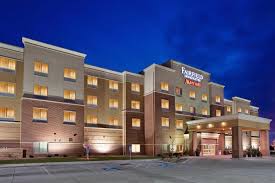
- 5:30 PM: Depart Fairfield Inn
- 6:30 PM: Position in blinds
- 9:30 PM: Return to Fairfield Inn
- 5:30 AM: Depart Fairfield Inn
- 6:30 AM: Position in blinds
- 7:30 AM: Sunrise
- 10:00 AM: Return to Fairfield Inn
- 11:00 AM - 3:00 PM: Lunch/download/downtime
- 5:30 PM: Depart Fairfield Inn
- 6:30 PM: Position in blinds
- 7:54 PM: Sunset
- 9:30 PM: Return to Fairfield Inn
This is your day to sleep in, it is needed. You are free to shoot on your own in the morning if you would like to!
- 7:30 AM: Sunrise
- 12:00 PM: Lunch/download/downtime
- 1:00 PM: Image Critique
- 5:30 PM: Depart Fairfield Inn
- 6:30 PM: Position in blinds
- 7:55 PM: Sunset
- 9:30 PM: Return to Fairfield Inn
- 5:30 AM: Depart Fairfield Inn
- 6:30 AM: Position in blinds
- 7:30 AM: Sunrise
- 10:00 AM: Coffee Q&A at Rowe Sanctuary
- 11:00 AM - 2:00 PM: Lunch/download/downtime
- 2:00 PM: Image Critique
- 3:00 PM: Instructor Roundtable
- 6:30 PM: Closing reception
Learn from World-Class Wildlife Photographers
Michael Forsberg
Jim Richardson
Melissa Groo
Dave Showalter
Chris Steppig
Michael Forsberg
Michael Forsberg is a Nebraskan whose 30-year career as a photographer and conservationist has been dedicated to wildlife and conservation stories in North America’s Great Plains, once one of the greatest grassland ecosystems on Earth. His images have been featured in publications including Audubon, National Geographic, Nature Conservancy, and Sierra magazines. His fine art prints are in public and private collections, and his solo exhibitions have traveled nationwide.
In 2017, Mike received the Ansel Adams Award for Conservation Photography from the Sierra Club in Washington, DC, and the Environmental Impact Award from the North American Nature Photography Association. Also, in 2017, his image of sandhill cranes on the Platte River was selected to illustrate USPS’s Forever stamp celebrating Nebraska’s 150 years of Statehood. In 2000, his photograph of a Nebraska tallgrass prairie was issued as an international airmail stamp in the United States Postal Service’s American Scenes Series. In 2020, Mike received the J. Sherwood Chalmers Medal from The Garden Club of America.
Mike is the author and photographer of On Ancient Wings – The Sandhill Cranes of North America, self-published in 2005, Great Plains – America’s Lingering Wild, published by the University of Chicago Press in 2009 and Into Whooperland – A photographer’s journey with whooping cranes, self-published in 2024. He was featured in the Nebraska Public Media documentary Crane Song and co-produced Great Plains – America’s Lingering Wild, based on his book of the same title, released on PBS in 2013.
In 2011, Mike co-founded Platte Basin Timelapse (PBT) in partnership with the University of Nebraska–Lincoln and Michael Farrell Photography and Fine Art. Today, it is a conservation storytelling project that informs scientific research, builds educational content, and tells stories of a Great Plains watershed in motion. The documentary Follow the Water, based on the project and Mike’s traverse across the Platte Basin watershed, was released on PBS nationally in 2019.
Mike is a faculty member in the School of Natural Resources at the University of Nebraska–Lincoln, a Fellow with the Center for Great Plains Studies and the Daugherty Water for Food Institute, a member of The Photo Society, and a Senior Fellow with the International League of Conservation Photographers.
Jim Richardson
Jim Richardson is a photographer for National Geographic Magazine and a contributing editor for its sister publication, TRAVELER Magazine. Richardson has photographed more than fifty stories for National Geographic.
Richardson’s work has taken him around the world, from the tops of volcanic peaks to below the surface of the soil that provides our food, from the Arctic to the Antarctic and many places in between. ABC News Nightline produced a story about the long process of assembling a National Geographic coverage by following Richardson in the field and at National Geographic Society headquarters in Washington, D.C.
In addition to his color photography, Richardson has built a distinguished body of black-and-white documentary work about rural Kansas life. His audiovisual presentation, “Reflections From a Wide Spot in the Road,” has toured internationally. His 40 years of photographing life in the Kansas town of Cuba, population 230, was published in National Geographic and featured twice by CBS News Sunday Morning, most recently in May 2004. His 1979 study of adolescence, “High School USA,” is now considered a photo essay classic and is used in college classrooms.
Richardson was named Kansan of the Year in 2007 by the Native Sons and Daughters of Kansas. In 2015 he was honored by his fellow National Geographic photographers as their “Photographer’s Photographer.” And in 2017 Kansas State University bestowed an honorary doctorate for his work in cultural and environmental communications. He is co-founder of Eyes On Earth, an educational collaborative seeking to inspire next generation environmental photographers.
Jim’s career at National Geographic magazine and National Geographic Traveler spanned over 35 years, during which time he produced over 50 stories. His stories ranged from poignant location based essays to complex scientific and geographical issues coverage. He’s valued for his compelling storytelling and his deft command of technical skills. Beyond his picture making he’s also highly regarded as a presenter and teacher. His lectures draw corporate clients to international venues. His topics ranged widely from world food, small towns and light pollution to include his much sought after whisky tastings.
Whether discussing documentary, landscape, night sky or iPhone photography, he brings a down-to-earth practicality to his lectures that is as enjoyable as it is instructive.
Melissa Groo
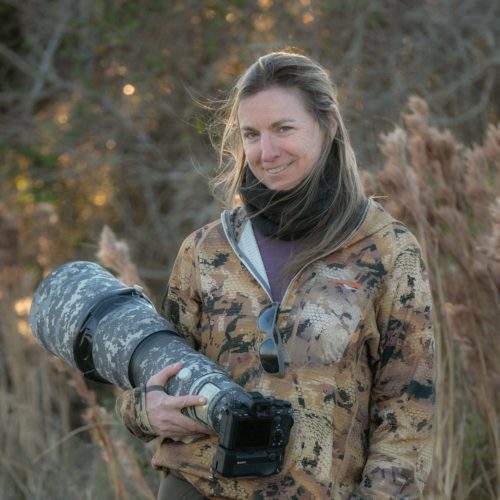
Melissa is a photographer, writer, and conservationist. She considers herself a “wildlife biographer,” telling stories with images and words that showcase the unique character and beauty of wild beings.
She’s a Sony Artisan of Imagery, an Associate Fellow with the International League of Conservation Photographers, and advisor to the National Audubon Society on photography content and ethics. She’s a contributing editor to Audubon magazine.
Melissa is an assignment photographer for Audubon and Smithsonian magazines, traveling far afield to cover conservation stories. Her work also appears in publications such as National Geographic, National Wildlife, and Living Bird magazines. Melissa is represented by National Geographic Image Collection and has a long-term gallery at Audubon Greenwich in Connecticut.
Dave Showalter
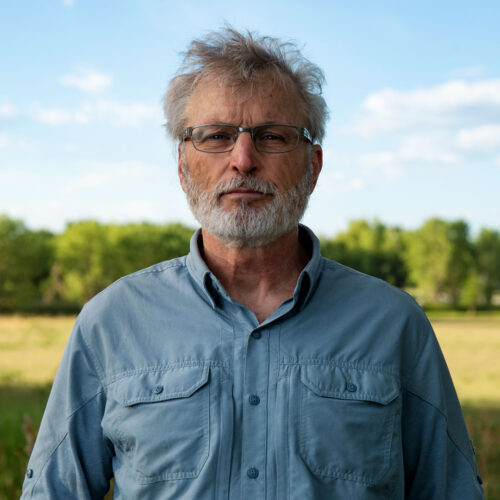
Conservation photographer and author Dave Showalter is based in Colorado and focused on the American West. Dave has published three books – the new book: Living River – The Promise Of The Mighty Colorado, Sage Spirit, The American West at A Crossroads by Braided River (2015); and Prairie Thunder by Skyline Press (2007). Dave’s photographs and articles have appeared in numerous publications, including Audubon, Conservation Biology, Outside, Outdoor Photographer, National Parks Magazine, High Country News, Wilderness, Colorado Life and elsewhere. In partnership with Braided River, Dave’s exhibit “Colorado: Sage Spirit and Roaring Rivers” was displayed at Denver International Airport 2018/2019 and viewed by over 2 million people. Dave is faculty with the Summit Series of Photo Workshops, a Senior Fellow Photographer in the International League of Conservation Photographers (iLCP), and works in partnership with numerous conservation groups, including Audubon Rockies, The Nature Conservancy, and Trout Unlimited Headwaters (Colorado River).
Dave travels extensively presenting Living River, Sage Spirit and a range of western topics. Please contact Dave directly through this site to plan a presentation, hire Dave for assignment, or plan a photo workshop.
Chris Steppig
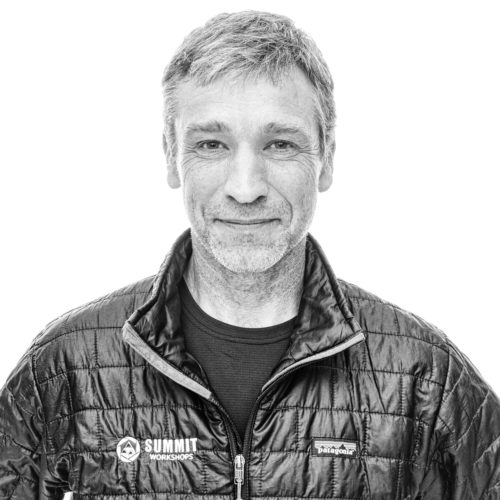
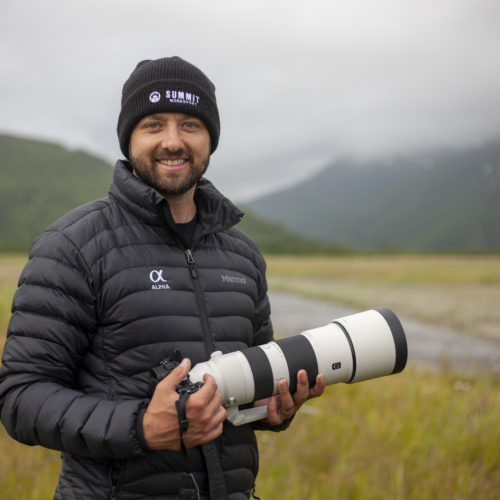
Chris is the owner and director of Summit Workshops. Summit was his first job out of college and nearly 20 years later, this is home. He is in charge of all workshop operations, scheduling, logistics, faculty, social media, marketing and sponsorship. Chris has a passion for conservation, travel, and education and the workshops are a dream platform to help others reach new heights as not only photographers but as people.
Chris is an affiliate of the International League of Conservation Photographers. The iLCP is a U.S. based non-profit whose mission is to further environmental and cultural conservation through ethical photography. This affiliation provides a tremendous opportunity to help deliver great content and also be an advisor on matters large and small. He is also a professional advisor for Outdoor Photographer magazine. Through collaboration and great communications with the editor of the magazine, there have been countless articles written by Summit Alumni in the magazine over the years.
Workshop Information
Photographing here is a practice in patience, persistence, and acceptance of what it gives you, but it can also be very rewarding and the experience itself and its sight and sound is unforgettable.
This workshop will provide opportunities to photograph Sandhill Cranes from group blinds on the Platte River as the cranes come back to the river roost for the evenings, and when they leave the river at first light in the mornings. In the mornings we will be up early and get to the blind and be settled in an hour before sunrise and will not leave until the birds have left the river. In the evenings, we will arrive to the blind about two hours before sunset and will not leave until dark. Between blind trips, we will download and edit images, have a group critique session of selected images, and provide opportunity to learn more about the Platte River Valley, its conservation and the wildlife it supports. There may also be opportunities to photograph these birds and other migrating waterfowl midday from county roads while they are feeding on waste grain leftover from in farmers fields from the previous fall harvest. Waste grain provides and nutrients from prairie grasslands and wet meadows provides fat reserves they need for migration and their early stages at the nest.
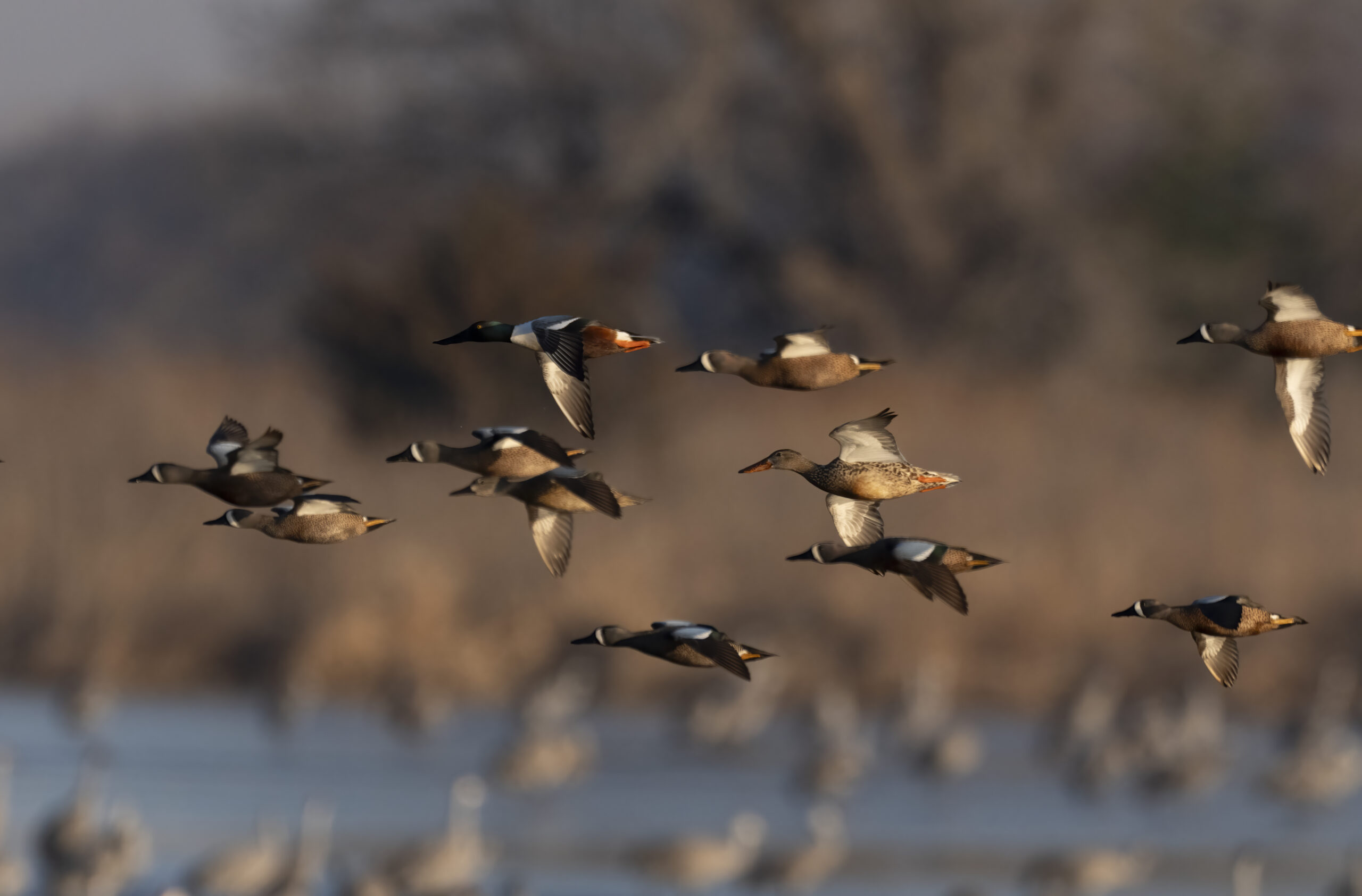
Photographing Sandhill Cranes in Nebraska’s Platte Valley is a very different experience than photographing cranes on wintering grounds or other migratory staging areas in the continent like Bosque Del Apache NWR in New Mexico or the San Luis Valley of Colorado where they are acclimated to human presence. This crane population in the Central Flyway is hunted in every state and province along their migratory pathway, except in Nebraska. Therefore the cranes are very skittish when they arrive here and usually do not tolerate human presence at less than several hundred yards unless you are in a blind or a vehicle. And while there are many protected areas for cranes and other wildlife along the river, central Nebraska is not wilderness. It is countryside, mostly in private ownership, and ranks as some of the most productive farmland in the world. Finally, the cranes and their daily rhythms and patterns change constantly, dictated by weather, water levels and disturbance, which are ever changing along the Platte. In late March, it can be 80 degrees and shirt sleeves one day, and 15 degrees and a blizzard the next. Together, this makes photographing these birds very challenging.
Getting there
The workshop takes place in Kearney, located along the central stretch of the Platte River. Most participants choose to rent a car for flexibility, especially for travel to and from the blinds and exploring the surrounding area.
The nearest airport is Kearney Regional Airport (EAR), just a short drive from town. Additional airport options include:
- Eppley Airfield (OMA) — ~2.5 hours away
- Denver International Airport (DEN) — ~4.5 hours away
Travel Times
Driving is straightforward, with easy access via Interstate 80. Kearney is easily accessible by car from several major cities:
- Omaha: 2.5 hours
- Lincoln: 2 hours
- Denver: 4.5–5 hours
- Kansas City: 4.5 hours
Health & Fitness
No strenuous hiking is required, but patience and the ability to remain still during sessions are essential for both the experience and the photography. This workshop is suitable for most fitness levels, but there are a few things to keep in mind.
- Early mornings and late evenings are required
- Participants should be comfortable sitting quietly for 2–3 hours at a time
- Access to blinds may involve short walks over uneven ground
- Temperatures can be cold, especially in the early morning
What to Pack
March in Nebraska can be unpredictable, so come prepared for a range of conditions. Being prepared for changing light and temperatures will help you stay comfortable and focused during long sessions in the blinds.
CLOTHING:
- Warm layers (thermal base layers, fleece, insulated jacket)
- Windproof and waterproof outer layer
- Hat, gloves, and warm socks
- Comfortable, weather-appropriate footwear
OTHER:
- Pack for carrying gear in the field
- Flashlight and/or headlamp (red)
- Water bottle
- Energy bars or other snacks
- Sunscreen and sunglasses
- Binoculars (optional)
PHOTOGRAPHY GEAR:
- 2 camera bodies
- Wide angle lens
- Medium zoom lens
- Telephoto lens (ideally 400mm–800mm range)
- Tripod or monopod (optional, depending on preference)
- Camera bag
- Extra batteries and chargers
- Laptop or tablet
- Memory cards
- Hard drive
Sony Gear
We are proud to partner with Sony, giving students the unique opportunity to experience some of the latest professional camera bodies and lenses in the field during the workshop. Throughout the week, participants can check out Sony gear to test and use in real shooting conditions in the blinds. This hands-on access allows you to explore new equipment, refine your technique, and see how different tools can impact your creative results, all while receiving guidance from our instructors in real time.
Past Student Work
Frequently asked questions
The peak of the Sandhill Cranes migration along the Platte River typically occurs from mid-March through early April. During this time, hundreds of thousands of cranes gather in central Nebraska to rest and refuel before continuing north.
Each session typically lasts 2–3 hours. Morning shoots begin around sunrise (approximately 6:00 AM), and evening sessions run through sunset as cranes return to the river to roost. Once inside the blind, participants remain for the full duration to minimize disturbance to the birds.
No! Summit Workshops is available to any photographer, regardless of what brand of camera you use. We often have camera gear available to borrow, free of charge, but you are not required to use that gear or any specific brand.
Tuition includes activity fees, location fees, all instruction, planning and logistics. It does not cover hotels, travel, and most meals.
Our workshop is for shooters of all ages and skill levels, from beginners to seasoned veterans. We all learn from and help one another, that is what makes the Summit Community so special.
Our image critiques are constantly mentioned as being the most important/valuable component of our workshops. It's not only a chance to get your work reviewed, but also to see your peers' images. It is not structured as a competition, but a growth experience. So do not feel it has the be your best of the best or how it might stack up to others. You get to hear the opinions of the faculty and everything you will hear from them is 100% meant to help you. They are also anonymous and meant to be constructive and useful to your professional growth.
We ask each student to submit 3-5 images taken while at the workshop. We typically send the link out the afternoon before the image critique, which gives you the evening to get your images in.
A car isn’t required, but it’s highly recommended. We’ll be driving back and forth from our hotel to the Rowe Sanctuary blinds and around the Kearney area to look for cranes during the day. Having your own vehicle gives you flexibility to explore and photograph more on your own schedule.
If you don’t have a car, no worries, we coordinate carpools and will make sure you have a ride for all workshop activities.
Main photo gear:
- Minimum 1 camera body, 2 ideal
- Wide angle lens
- Medium zoom lens
- Telephoto lens
- Tripod
- Camera bag
- Camera bodies
- Camera batteries and chargers
- Laptop or tablet
- Memory card
Highly recommended:
- Adobe Lightroom or PhotoMechanic installed on laptop
- 15 - 20 of your best images downloaded on your laptop for portfolio reviews
Join us on the River
This is a small-group experience with extremely limited availability. Once the remaining spots are filled, registration will close. If photographing this migration has been on your list, this is your opportunity to make it happen.

The Magic of Sandhill Cranes
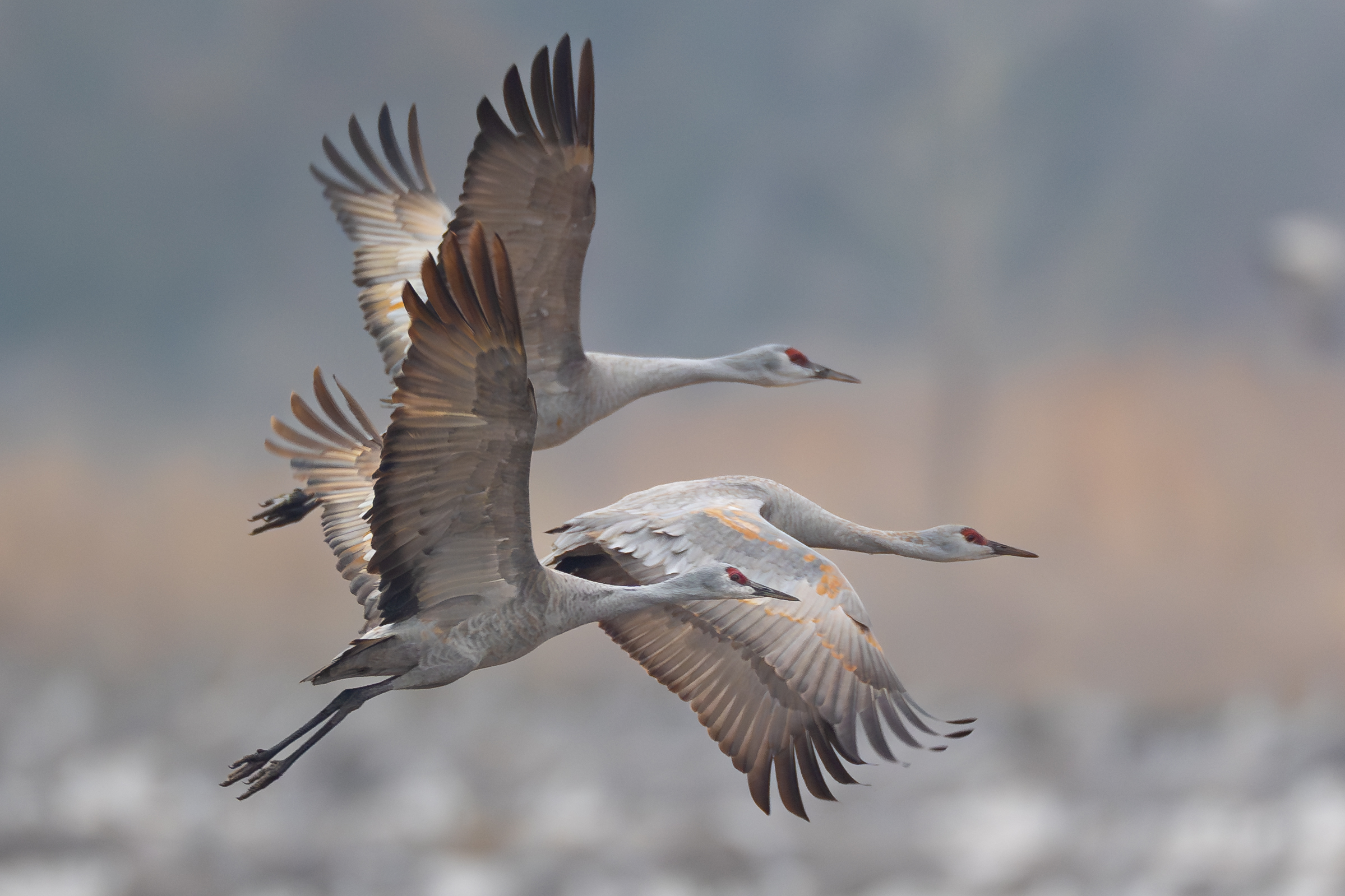
Each spring, roughly one million sandhill cranes, the largest gathering of cranes anywhere in the world, gather in the Platte River Valley of south-central Nebraska
Return to the River
Out in the darkness there are 600,000 Sandhill Cranes on the Platte River. They have come back — and so have we. Our small band

Our Workshop Partners
Sony Alpha Universe
Sony Alpha Universe is here for the makers, the doers, the people who dream in colors. You bring your curiosity and ideas, we’ll provide the knowledge, the inspiration, and the state-of-the-art imaging tech to help you make dreams reality.